

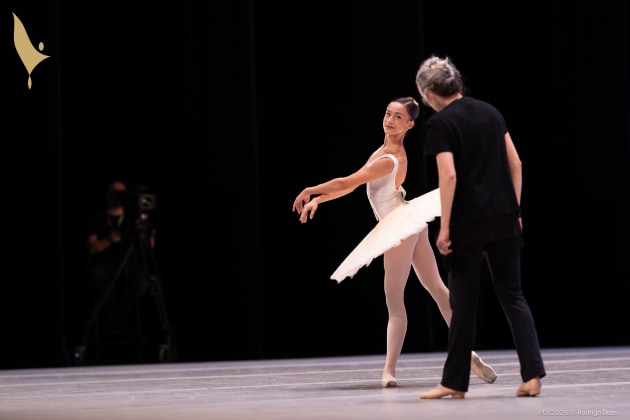
So, you’ve finished your full-time dance training? Maybe you attended a finishing or tertiary training organisation in Australia or New Zealand, or maybe you’ve returned home to Australia after finishing your training overseas in Europe or the USA, and now you’re wondering what you can do with all of the training and physical knowledge that you’ve developed. Unfortunately, there are nowhere near enough full-time company contracts available each year compared to dance graduates. Building a career in the dance industry in Australia takes perseverance, a whole lot of soft skills, and gaining new perspectives of what the industry is actually like outside of the training institutions that you’ve dedicated so much time and energy to. It might also be the case, especially if you received your finishing training overseas, that you believe that there is no dance industry in Australia, and that the only way to have a career in dance is to go overseas. Whilst it is true that the arts in Australia often play second fiddle to sports in the cultural zeitgeist, that does not mean that there isn’t a huge industry of performing arts in Australia; you just might need to look a little more deeply.
Navigating the jump between student and professional is hard. Many graduates really struggle, especially if they’ve been told that the only way to have a career in dance is to have a full-time company contract straight out of school. When this doesn’t happen (which is for the majority of dancers), people often feel lost and don’t receive any guidance on how to navigate the early stages of a career. But building a long-lasting, fulfilling career in the arts in Australia is possible; it just requires some outside-the-box thinking.
Of course, all career advice should be taken with a pinch of salt. The person giving the advice can only share what has worked for them, and everyone has different skills, privileges, and goals for their career. Take on all advice, but most importantly, find what works for you. Below are my top five tips for navigating your early career as a recent dance graduate.
1. Firstly, ask yourself the question: ‘Why do I dance?’
Ask yourself, ‘What is success?’, and ‘what aspects of my ‘why’ are must-haves for a life that I would find joyful, and that I can not live without?’ Write down what your answers are, then read through them and see if they are actually true to how you feel, or if they are what you have been told success should look like. For example, if you dance because you love creativity and exploring different choreographic concepts, perhaps you wouldn’t actually be happy in a full-time company contract. Often, these jobs are reproducing choreography that already exists and doesn’t allow a lot of freedom of expression. At the end of the day, the reason we have followed a career into the arts is because we want to do something that is true to ourselves. This may look different to what traditional ‘success’ is, and that’s ok. There are many ways you can fulfil your ‘why’, and none of them are a failure to your training or to yourself.
2. Keep dancing.
If you teach at a studio, arrive early and do class by yourself. If you live in a major city, take professional classes and make friends with other independent dancers. Find every piece of time and energy that is available to you and keep training (of course, whilst still holding your work-life balance and prioritising rest days as well). Some days, training may look like doing a ballet barre at home in socks with your dining room chair. Just keep going. This time of self-directed training may also help you deepen your ‘why’ and help you find your own creative voice outside of training institutions and teachers.
3. Network.
Make friends with other independent professionals, and attend secondment and training weeks, industry events, and social events. Making friends in the industry, especially with other independent dancers, is how you will get jobs. Our industry, for better or worse, is very much determined by who people want to work with, not necessarily who is the best dancer. That isn’t to say that you shouldn’t stand up for yourself in a situation where you are being taken advantage of, but be your own, joyful, dancing self, make friends and embed yourself in your local dance community. It’s also important to keep in mind that sometimes you will be in situations where you are volunteering your time and expertise to your fellow dancers. This is a part of a dancer’s career, however, it is up to each person to determine when and for whom they are willing to volunteer their time. We each have a responsibility to ensure our work is valued and is considered to be the professional service that it is. A mentor relationship may help you navigate this. See if you can foster a mentor relationship with a dancer that you look up to and would like your career to look like theirs in a few years. They may be able to help you and give you some advice, or at the very least, understand the difficulties of an emerging dancer's career.
4. Keep your survival job within the industry.
There is nothing shameful about a survival job. All your favourite artists either have one now or have needed one in their career. Jobs like a box office attendant, dance teacher, working in hospitality, technician, front of house or usher roles at theatres or entertainment venues (even sports stadiums), admin or producing work for a gallery, performing arts, or events company, all of these roles are important to the performing arts industry and are often overlooked. Make this job something you like (or at least don’t hate), makes enough money to live and gives flexibility for performance seasons. You may need to opt out of other work quickly if you are offered a performance gig. This is where casual work can be helpful, although it also has its downsides, such as not offering personal leave and job security. Keeping your survival job within the entertainment industry will also give you other skills, such as producing, customer service skills, the ability to network with other stakeholders in the community, and deepen your community resources. All of these skills are super important for an independent dancer's career.
Go back to your ‘why’. Ask yourself if you can fulfil this outside of a performance career. This doesn’t mean that you can’t continue to aim for a performance career, far from it, but you might be surprised by what your ‘why’ actually is, and that there are many ways that you can fulfil this that can bring a lot of joy to your life. Perhaps you really enjoy pushing your body every day; you might also enjoy Pilates or Personal Training. Perhaps you really enjoy sharing your love of dance with others; you might also enjoy teaching dance to young people and amateur adult dancers. Perhaps you really enjoy exploring artistic, philosophical questions; you might also enjoy pursuing academic research in dance. Don’t be cornered by what you’ve been taught success in dance looks like; there are many ways to contribute to the performing arts industry in Australia, and there are many jobs that benefit from the skills you’ve learnt as a dancer. If you know your ‘why’, perhaps your survival job can become just as fulfilling as your performing dance career.
5. Create your own work. Don’t sit around waiting for a golden contract. Be proactive about what you like exploring choreographically. Despite this, it is very hard to produce, choreograph, and dance in your own work. This is where your network and community come in. Reach out to your fellow independent dancers and share the load of an independent project. Look into your city’s Fringe Festival or Independent Dance Festival. These organisations are there to help independent artists produce their own work and will be able to help you get your idea up off the ground. Some of the most artistically fulfilling work is the work you create yourself.
It’s important to remember that an arts career is not just what happens on the stage. As fully trained dancers, you know the amount of work it takes in the studio to physically prepare for the stage. However, as a young professional, you now also need to learn that there are many other skills that are developed outside of the studio and stage that contribute to a successful arts career, such as business skills, networking, and self-driven determination. If you keep why you are driven to a career in the arts as your driving light, you will be able to develop a career that is joyful and fulfilling, even if it doesn’t look like what you thought it would be as a student. 
Caitlin Halmarick