

Review: Shel We
Tupua Tigafua / Le Moana, Brisbane Festival
Cremorne Theatre, QPAC, 10–13 September 2026
Review by Caitlin Halmarick
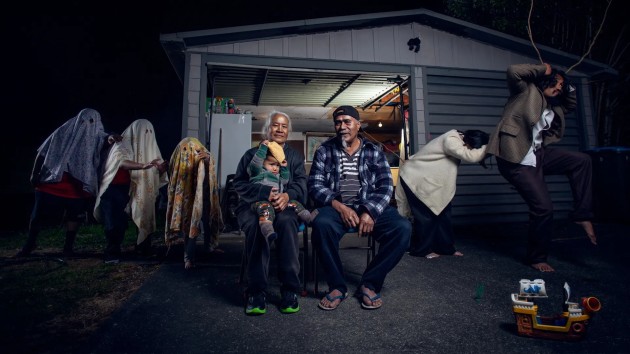
Shel We is a dance theatre work that is part of the contingent of works from Aotearoa New Zealand brought over to Brisbane Festival to delight and intrigue audiences. Performed at QPAC’s Cremorne Theatre, Shel We features a cast of six male dancers of Islander descent, led by Tupua Tigafua and presented by Le Moana, an arts organisation dedicated to the development of storytelling by Pacific Islands artists.
The show opens midway through a journey, a man on the shoulders of another, counting out steps across the stage. Then, in true New Zealand fashion, we are greeted by a song, calming our restless bodies into the seats of the Cremorne Theatre, ready to be receptive to this fantastical world opening before us.
We are brought to the shores of Aotearoa New Zealand with the sounds of wind and rain. These men are going to tell their stories their way, with a reclamation of Baroque-era music.
The way into this story-land is through humour. This humour is a balm for Australian audiences. Branches are used as antlers, and duos of dancers play pretend as deer, munching on leaves, galloping around the stage, and just generally having a good time, all to the delight of the audience. Even when the storytelling themes become heavier, and gunshots sound, the audience can’t help but giggle; we are in such a humour-based headspace that serious themes are absorbed by humour. There is humour in all scenes, even death scenes, and this allows us to be receptive to the story, to have our hearts open.
Mirroring the famous children’s book The Giving Tree, which provided the creative spark for this work, one scene details the old generation giving to the young until the young are also old, and the cycle continues. We are all riding on the shoulders of giants. The journey tries to continue, mirroring the start of the show with one man on the shoulders of another. The journey recommences, counting out their steps, this time in te reo Māori, but no, the walker is corrected; he must count his steps in English. From now, they journey in English. It is these story beats that the audience is completely open-hearted for, because we are always travelling with humour.
Similarly, in another scene, the dancers sing the alphabet song with an accompanying dance. From one viewpoint, this scene is a humorous interlude, but it could also be viewed as another way that English was forced on Pasifika cultures. How song, which was used to pass on stories and culture, is now being used to learn the colonisers’ language.
What cannot be overstated, throughout the entirety of the performance, is the astonishing movement quality that is exhibited by all dancers on stage. Each movement is as smooth as butter, with perfectly executed dynamics to hit beats, to tell stories and to keep the audience intrigued. In all dance scenes, I was mesmerised by the movement quality of these dancers.
Lighting designer Elekis Poblete Teirney also deserves a special mention. Their lighting brought weight and mood to every scene and was perfectly juxtaposed with the humorous nature of the work, not too heavy-handed but still adding mystery and seriousness to the storytelling.
As the work finished, there was not a traditional curtain call, but each dancer performed a short solo, celebrating dance.
It was a joy to see collectivism and unity in a contemporary dance performance, a form that at the moment is leaning towards a preference for individualism even when dealing with collectivist themes.
Shel We was ultimately a celebration of telling your own stories, humour, togetherness, and mischievous mystery, and will remain in my heart long after the performance.