

Bangarra Dance Theatre
Townsville Civic Theatre, August 2026
Review by Caitlin Halmarick
Bangarra Dance Theatre’s regional tour of Horizon drew a full house in Gurambilbarra/Townsville, where its meeting of contemporary First Nations dance, Torres Strait Islander stories and Māori culture found an enthusiastic audience.
Bangarra Dance Theatre is touring its double bill Horizon to regional Queensland in August and November 2026. Bangarra was greeted at its Gurambilbarra/Townsville performance with a full house and an audience that reflected the diversity of the city. Before the show, there were plenty of friendly greetings in the foyer and chatter that it had been a long time since the company had come to the Townsville Civic Theatre: the promise of contemporary First Nations dance had brought these occasional theatre-goers back to the Civic.
Before the show started, I was struck by the inclusivity and accessibility that are core to Bangarra performances. Programs were handed out with detailed descriptions of the Salt Water and Fresh Water stories to be told that night and their significance to the choreographers. Audio Description services were also available, along with QR codes providing detailed descriptions of the show for audience members who wanted to access them.
As we gathered in the theatre and the lights dimmed, an Acknowledgement of Country was announced, acknowledging the body, breath, rhythm and song of this Country. This was followed by a Welcome to Country in language by local Traditional Owner Ashley Saltner Jnr.
The dancing opened with Kulka, choreographed by Sani Townson. The dancers’ movements were assured. There was a confidence in their bodies that was beautiful. The men, in particular, demonstrated great strength, and overall there was a refined mix of contemporary and traditional First Nations dance aesthetics that we have come to expect, know and love from Bangarra Dance Theatre. It is fantastic to see traditional aesthetics respectfully integrated with contemporary dance by these First Nations artists.
I was particularly entranced by the section Koedalaw Awgadh (Crocodile God). A trio of dancers used the tried-and-true choreographic tool of canon to create the undulating movements of the crocodile: a reminder that simple choreographic tools, when used appropriately, can produce sophisticated and effective choreography.
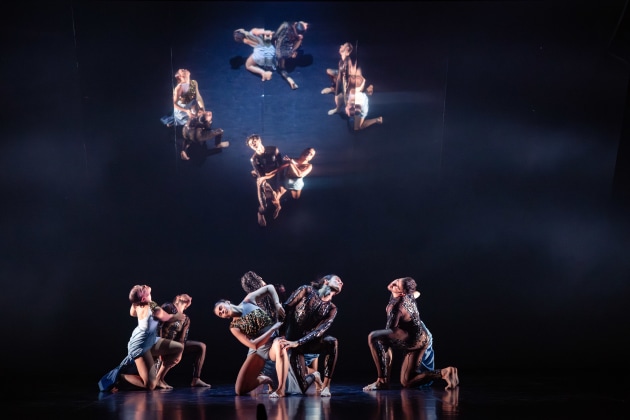
Towards the end of Act I, projection was used on the textured drape at the rear of the stage. What could easily have become a technical gimmick instead operated almost as an additional dancer within the scene, emphasising movement, themes and mood.
Moving from Act I to Act II, I found myself wanting an interval, which was not given. However, Deborah Brown’s Salt Water similarly drew on a Zenadth Kes Torres Strait Salt Water story, successfully connecting the two acts.
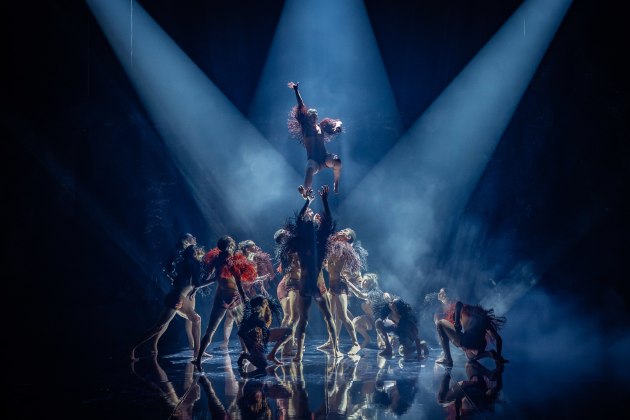
The mirrored flooring emulated a beautiful pool of water, allowing the dancers and lighting to play with shadow and reflection. One also spares a thought for the dancers negotiating a floor that is initially sticky, then becomes increasingly slippery as they begin to sweat.
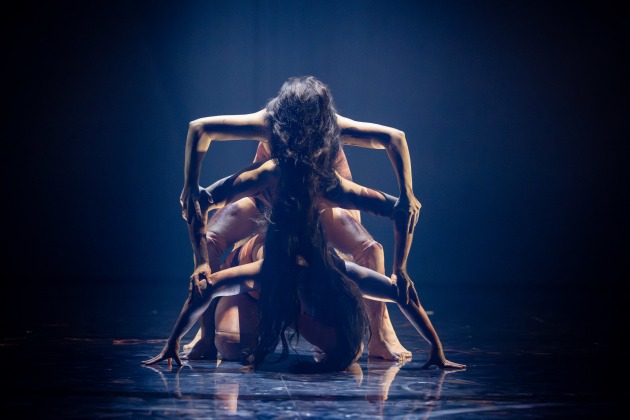
I was mesmerised in one scene by the women’s dancing. They appeared to me as ethereal yet grounded beings, blessing us with their presence and movement.
Passing through stories of seafaring, Coral and Reef, mining, Stars, Culture and Community, we arrive at the final work of the evening, Wai Māori/Fresh Water, by Māori choreographer Moss Te Ururangi Patterson.
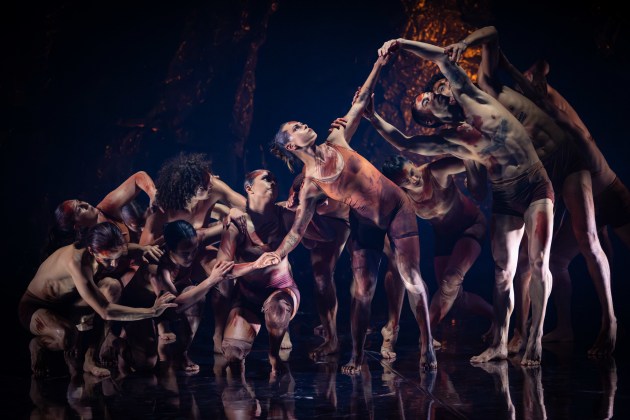
This work displayed the strength of the men and women on stage through haka-inspired movement. The performers’ vocalisations, claps and sounds were amplified with incredible technical precision: we heard only what enhanced the performance.
It was interesting to witness Indigenous Australian dancers performing Māori stories. I went looking in the program notes for the intention behind this beautiful sharing of culture and found that Bangarra’s co-CEOs wanted to “invite a broader global First Nations conversation about the issues that impact our people and Country”.
Through the dancers, we experience the respect, strength, worldview, beauty, collectivism and mana that are at the core of this performance, influenced by Patterson’s Māori cultural heritage. It is a gift to those who witness it for these cultural stories to continue to unfold and be presented to audiences.
Throughout the evening’s performance of Horizon, a question began to unfold in my mind: is it right that this form of First Nations dance, performed in a proscenium-arch theatre, is the primary First Nations dance form accepted by funding bodies and toured around Australia?
Does Bangarra, as Australia’s foremost First Nations dance company, have a responsibility to open its audiences to more traditional forms of First Nations performance, venues and environments? How can funding bodies better disseminate resources so that the full scope of First Nations performance art is available to people, across traditional and contemporary aesthetics and performance structures?
These questions are beyond the scope of this review, but I encourage further discussion around how Australia’s cultural heritage can continue to develop and be presented.
Horizon, particularly its strength, was loved by the Townsville audience. It is also worth mentioning that this enthusiastic crowd showed up to the theatre on the night of a home-ground Cowboys NRL and NRLW double-header. In a city where rugby league is a major cultural force, this was an impressive feat.
With its mirrored floor, strong choreography and partnered lifts, Horizon was a visual spectacle and warmly received in regional North Queensland.
-Caitlin Halmarick