Now that the dust has settled on the 2026 Prix de Lausanne it is interesting to reflect on the ways this international competition for young dancers aspiring for a professional career has changed and is changing.
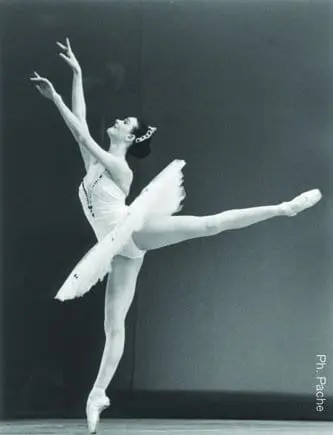
The most obvious is that nowadays it is well and truly a highly professional arts organisation. The competition I took part in in 1994 was a little more like organised chaos, as candidates from all over the world descended on Lausanne for a week, spread over a few hotels on Rue du Petit-Chêne, meeting nightly for the announcements of “who had made it through”. In those days, you may never have graced the stage of the Théâtre de Beaulieu in the first place, having been eliminated after a single class.
That all changed in 2006 when the Prix organisers introduced video pre-selections. This way, at least those who fork out the dollars to get to Lausanne are assured they will take part the whole week and perform their variations on the stage at least once!
And a week in Switzerland is not for the short of means. The Prix today is determined to ensure that talented dancers without means can still come and has put this into action through regional pre-selections and a scholarship system. The current Artistic and Executive Director Kathryn Bradney is particularly strong on this, having dreamed at fifteen in upstate NY of dancing on the Lausanne stage, though her parents could not afford it. Instead, she auditioned for Maurice Béjart at nineteen and found herself in Lausanne by another route.
Access aside, the nature of the week itself has changed.
The competition I did some thirty years ago was, quite simply, a competition—a way of choosing which young dancers taking part deserved scholarships to major schools. Today the Prix is as much an educational and networking platform as it is a dance competition. In 2018 the Partner Schools Choreographic Project began, bringing together students from partner schools to create and present a new work in one week with a renowned choreographer.
In 2021 the Young Creation Award followed to foster early choreographic talent. I personally find that when candidates choose and perform the choreography of their peers, their performance carries more meaning.
One thing I can’t help but wonder is whether the 16-year-old I was in 1994 would find herself among the winners in 2026. It’s not just that the Prix has become so much more professional. Young dancers have too. These 15–18-year-olds arrive media-savvy, globally travelled and competition-literate, some with thousands of Instagram followers. Thanks to advances in training, a broadened pool of students and the accessibility of information, their technique and strength of purpose are well beyond their years. When I competed, I was well trained, but still slightly undercooked. Today’s finalists, particularly the 18-year-olds, appear closer to company-ready. Of course, years differ, and choice of candidates and finalists results from many factors. 2027 may prove different again.
The Prix de Lausanne is something of a barometer for the ballet world. I couldn’t help noticing this year’s candidates’ ease in contemporary work compared with earlier decades when their exposure to this genre was more limited. If anything, it is the classical work where some look less at ease. Perhaps that’s to be expected. Not only is classical ballet extremely difficult, but with each generation we grow further away from origins of those roles and ballets.
On that note, the Prix is always assessing and updating their repertoire. This year “The Kermesse in Bruges” by Bournonville was introduced to the classical repertoire. Bournonville prized purity of dancing—clarity, musicality and integrity of steps.
Clarity. Musicality. And integrity. I think it’s interesting to note that these values haven’t changed. It’s what all dancers strive for no matter the vernacular. It will be fascinating to watch how today’s young dancers step into that lineage while making it relevant to themselves.
But, if there’s just one little thing I confess I miss, it’s the raked stage, removed in the theatre’s 2022 renovation. I liked the challenge of that quirk. It was part of the folklore — “Have you danced on the raked stage at the Prix?”
What has not changed is how much the young dancers gain from the experience. The friendships that last. The sense of community. Exposure to a wider world. For me, the Prix has never stopped giving.
-Emma Sandall
Dance Australia’s 2026 Prix de Lausanne coverage is generously supported by Bloch Australia.