



Each year Dance Australia’s What’s On Guide offers a glimpse into the artistic pulse of the season ahead, and 2026 reveals a landscape defined by ambition, collaboration and a remarkable breadth of choreographic thinking. Across the country, companies are engaging with legacy, expanding creative vocabularies and inviting audiences into worlds shaped by ritual, innovation, theatrical scale and intimate human detail. From landmark collaborations and adventurous festivals to new commissions that speak directly to the pace and complexity of contemporary life, this guide reflects a national dance ecology alive with imagination and intent.
Australasian Dance Collective
Australasian Dance Collective’s 2026 season moves along multiple axes, theatrical, architectural and international, revealing a company that treats contemporary dance as a field in constant reconfiguration.
At its centre sits THREE, returning to Brisbane Powerhouse in July. Two major new commissions from Amber McCartney and Joel Bray join the Queensland debut of Harrison Ritchie Jones’ widely admired duet CUDDLE. Since its inception, THREE has been less a mixed bill than a sustained dialogue among choreographers with distinct impulses. Artistic Director and CEO Amy Hollingsworth notes that “THREE brings together a myriad of perspectives while giving each choreographer space to share their distinctive voice.”
Hollingsworth reunites with Jack Lister for a new site-responsive work following the impact of their 2025 project Relic. Although details remain undisclosed, the scale and ambition of the partnership suggest another transformation of urban space into choreographic terrain.
Assembly Vol. 2 returns for one night only, pairing three live musical acts with a new work by Alisdair Macindoe, creating a kinetic exchange between sound and movement.
A major international tour rounds out the year and reflects ADC’s growing resonance with audiences abroad. The 2026 program offers multiplicity, boldness and a continual widening of choreographic possibility.
The Australian Ballet
The Australian Ballet’s 2026 season considers heritage, artistic exchange and the emotional resonance of movement, exploring what ballet can hold across tradition and contemporary reinvention.
The year opens in Melbourne with Signature Works, a concentrated celebration of repertory performed with Orchestra Victoria. Rather than nostalgia, the program offers renewed encounters with choreographic signatures that have shaped the company.
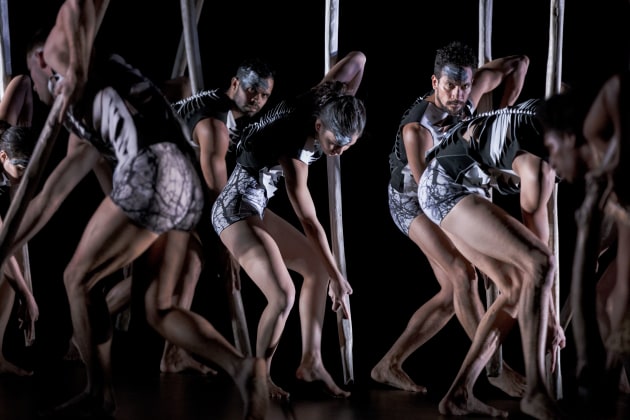
At the heart of 2026 is Flora, a landmark collaboration with Bangarra Dance Theatre. Choreographed by Frances Rings with a new score by Kalkadungu composer William Barton and designs by Grace Lillian Lee and Elizabeth Gadsby, the work gathers 18 dancers from each company. Flora becomes a meditation on ecology, identity and the interdependence of human and natural systems. Artistic Director David Hallberg observes that “by bringing together diverse voices and perspectives, we honour ballet’s rich heritage while shaping a future that is vibrant, relevant and inclusive.”
John Cranko’s Romeo and Juliet returns with its emotional intensity, Prokofiev’s luminous score and Jürgen Rose’s sumptuous designs. Justin Peck’s Copland Dance Episodes makes its Australian premiere with bold movement and Jeffrey Gibson’s chromatic visual world.
In October, The Stuttgart Ballet arrives in Melbourne with Marcia Haydée’s The Sleeping Beauty, offering Australian audiences a rare encounter with one of Europe’s leading ballet companies. The year closes with Sir Peter Wright’s The Nutcracker at the Sydney Opera House, a festive tradition that continues to enchant audiences of all ages.
The 2026 season affirms ballet’s capacity to hold myth, innovation and intimate emotional connection within a single repertoire.
Bangarra Dance Theatre
Bangarra’s national tour of Sheltering brings together three works that consider protection, transformation and cultural memory through a distinctly First Nations lens.
Glory Tuohy-Daniell’s Keeping Grounded, first created for Dance Clan 2023 and expanded for the mainstage, reflects on the enduring bond between people and Country. Its choreography moves with grounded force, evoking energies that remain steady even in a shifting world.
Brown Boys, directed by Daniel Mateo and Cass Mortimer Eipper, blends film and dance to explore the experiences of young Indigenous men. Inspired by Mateo’s poetry and heritage as a Gamilaroi and Tongan man, the work unfolds with lyrical intimacy.
The program culminates in Frances Rings’ Sheoak, created with music by the late David Page. The sheoak tree becomes a symbol of continuity and care. Rings explains that “in Sheltering, we see how choreographers from different eras express the company’s legacy.”
Touring from May to July, Sheltering offers audiences a powerful experience of story, lineage and the resilience carried through movement.
Co3 Contemporary Dance
Co3’s 2026 presentation of Gloria is both homage and renewal, a trans-Tasman collaboration that honours the legacy of Douglas Wright while foregrounding contemporary voices.
Wright’s seminal work Gloria, set to Vivaldi’s radiant score, remains the program’s centrepiece. Its ecstatic physicality and spiritual charge continue to resonate, offering audiences a rare chance to encounter a work that shaped the evolution of contemporary dance in Aotearoa and the region.
Artistic Director Raewyn Hill contributes A Moving Portrait, an intimate reflection on ageing and presence. Known for her sculptural approach, Hill traces the quiet revelations held in shifting weight, breath and stillness.
Moss Te Ururangi Patterson’s Lament brings a deeply felt exploration of whakapapa and endurance. Rooted in Ma¯ori cultural perspectives, the work considers grief as a continuum rather than a single emotional state, unfolding with both tenderness and ceremony.
Performed at His Majesty’s Theatre on 31 March and 1 April, Gloria reveals the power of lineage, mentorship and artistic dialogue across generations.
Dancenorth
Dancenorth’s 2026 season moves across national touring, AI-generated performance and long-form creative development, each project revealing the company’s characteristic blend of rigour, curiosity and deep community grounding.
A seven-city Australian tour opens the year with Lighting the Dark, directed by Kaurna-based artist Chris Dyke. Inspired by Bowie, Mercury and Banksy, the work carries the imprint of Dyke’s decade-long relationship with Dancenorth. Co Artistic Director Kyle Page notes Dyke’s desire to work with the full Ensemble, adding, “we just knew we had to make it happen.”
In July, the company returns home with Plagiary, Alisdair Macindoe’s evolving experiment in AI-driven choreography. Developed partly during a 2020 NO SHOW residency, the work generates a fresh performance at every showing. Macindoe began exploring AI in 2018, “before AI had entered the mainstream, daily vernacular,” and the work now stands as a prescient inquiry into authorship and agency.
Later in the year, Michelle Heaven premieres a new work developed through The Whole Thing, Dancenorth’s three-year artist development program. Heaven has constructed a world of vivid character detail and inventive physicality. Page reflects that sharing the work with the local community is “a real honour.”
Beyond its major works, the company expands its Regional Gravitation Program, continues its Community Experience initiatives and furthers development on Galaxia, a collaboration with Amber Haines, Andrew Schneider and Dr Bayo Akomolafe. Co CEO Hillary Coyne summarises the company’s ethos: “empowering many, diverse voices to rise through dance.”
Dancenorth’s 2026 season balances innovation with deep cultural and regional embeddedness.
Queensland Ballet
Queensland Ballet’s 2026 season foregrounds dramatic storytelling, musical scale and choreographic diversity, offering audiences a broad panorama of classical and contemporary work.
Christian Spuck’s Messa da Requiem opens the season at QPAC’s Glasshouse Theatre. Performed with Queensland Symphony Orchestra and Opera Australia, the production invites dancers and musicians into the emotional expanse of Verdi’s monumental score.
Garry Stewart’s Elastic Hearts transforms the music of Sia into a choreography of resilience and exuberance, while Leo Mujic’s Hamlet reimagines Shakespeare’s brooding prince with psychological tension and sculptural movement.
Paul Boyd’s Red Riding Hood and the Wolf introduces younger audiences to narrative ballet with humour and clarity. December brings Derek Deane’s new production of The Nutcracker, created specifically for Queensland Ballet with designs by Lez Brotherston. The production is poised to become a signature festive offering.
At the Thomas Dixon Centre, Strings features works by Goyo Montero, Spuck and Edward Clug, providing an intimate view of the ensemble’s versatility. Bespoke continues as a platform for new choreographic voices, while the Academy’s Gala and Soirée, inspired by the visual world of Jeffrey Smart, highlight emerging talent.
The season’s range and artistic confidence reveal a company working expansively across styles, audiences and expressive registers.
Royal New Zealand Ballet
Royal New Zealand Ballet’s 2026 season travels between political theatre, community storytelling and classical splendour, offering works that speak with clarity, ambition and emotional resonance.
The year begins with Macbeth, a major co-production with West Australian Ballet choreographed by Alice Topp. “An epic story fuelled by political ambition, passion, desire for power and the burden of guilt,” Topp notes, reframing Shakespeare’s tragedy within a contemporary landscape of media saturation and hierarchical competition. With designs by Jon Buswell and Aleisa Jelbart and live musicians from the New Zealand Symphony Orchestra, Artistic Director Ty King-Wall observes, “Macbeth is the Royal New Zealand Ballet as you have never seen us before.”
April brings Dazzlehands, a national tour for younger audiences based on Sacha Cotter and Josh Morgan’s picture book. The work celebrates creativity and courage, reinforcing the company’s commitment to reaching communities across Aotearoa.
The Winter Season pairs the New Zealand premiere of Ashton’s Birthday Offering with Sarah Foster-Sproull’s Ultra Folly and Andrea Schermoly’s Stand to Reason, which honours the women who fought for suffrage in New Zealand. Together, the three works reflect on lineage, social change and the expressive potential of ensemble movement.
The year concludes with the return of Greg Horsman’s The Sleeping Beauty, featuring Gary Harris’s designs, contributions from Weta Workshop and Tchaikovsky’s score performed live. The production promises the same opulence and theatrical clarity that captivated audiences in 2011.
This is a season of breadth and dramatic force, rich in narrative and cultural resonance.
Stephanie Lake Company
The year begins with The Chronicles closing its national tour at Adelaide Festival, while Manifesto launches into a month-long North American tour across Virginia, Montreal, Ottawa and Vancouver plus the headline slot at Cannes Festival de Danse in November. Colossus continues its remarkable global journey with performances at Southbank Centre London’s for its 75th Anniversary Season and Galway International Arts Festival.
A major highlight of 2026 is the world premiere of VISTA, a new collaboration with Robin Fox, Bosco Shaw and Alpha60, debuting at Malthouse Theatre before touring to Sydney and Brisbane. Internationally, SLC expands its creative footprint with the TANZ LINZ (Austria) commission of Auto Cannibal, and Stephanie Lake continues her residency at Semperoper Ballett in Dresden, creating a new mainstage work for the acclaimed company.
The company will be nurturing emerging talent through new commissions, open studio showings, international masterclasses and the popular Summer Intensive, alongside ongoing paid internships and secondments year round. Stephanie will also create works for The Australian Ballet’s National Tour and VCASS
“2026 is a year of thrilling horizons for Stephanie Lake Company – a chance to perform our works across the globe, connect with big audiences, collaborate widely and support the emerging artists who shape the future of our field.”
Sydney Dance Company
Sydney Dance Company’s 2026 season marks forty years at Walsh Bay and traces lines between history and reinvention, placing new commissions, independent voices and archival reflection into close conversation.
At the Sydney Opera House, Engine presents three contrasting works. Rafael Bonachela’s The Journey Itself Is Home draws on the writings of seventeenth century poet Matsuo Basho¯. He explains, “we do not dance to arrive somewhere fixed or final, but to stay in motion, to stay open.” Fran Diaz’s The Mass Ornament examines collective rhythm and individuality, while Melanie Lane’s Love Lock, created with designer Akira Isogawa and composer Clark, imagines a futuristic folk dance.
Later in the year, Current invites audiences into the Neilson Studio for new works by Raghav Handa, Jenni Large and Azzam Mohamed, alongside the Australian premiere of Bonachela’s E2 7SD. Revisiting the duo more than two decades later, he reflects, “the seeds of what I do now were already present then.”
The fifth INDance season highlights independent voices including Christopher Gurusamy, Emma Harrison, Large and Oli Matheisen. Large begins her tenure as The Balnaves Foundation Artist in Residence, deepening her connection to the company.
Extensive national touring precedes another major international season. The launch of ORBIT, a new alliance with Australian Dance Theatre and Dancehouse, strengthens opportunities for independent choreography across Australia. As Bonachela notes, “when we join forces, we amplify what is possible.”
The season brings together reflection, invention and a forward-looking sense of creative openness.
West Australian Ballet
West Australian Ballet’s 2026 season, titled Of Here. From Then., marks Leanne Stojmenov’s first year as Artistic Director and offers a dynamic blend of heritage and forward motion.
The annual Quarry season returns with Incandescence: Ballet at the Quarry, featuring four world premieres. Works by Tim Harbour and Ihsan Rustem sit alongside first mainstage creations by company artists Chihiro Nomura and Polly Hilton, creating a program that spans established choreographic voices and emerging perspectives.
Krzysztof Pastor’s Dracula returns with its potent mix of seduction, theatricality and emotional tension, accompanied by designs from Phil R. Daniels and Charles Cusick Smith. The production also tours to Adelaide, marking the company’s first interstate appearance in more than a decade. Stojmenov notes, “we are excited to share this powerful and seductive story with new audiences.”
Genesis, once an internal choreographic platform, has evolved into an anticipated annual event where experimentation and refinement come into focus.
The season concludes with The Nutcracker at His Majesty’s Theatre. Performed with West Australian Philharmonic Orchestra, it remains a beloved entry point for new audiences and a festive ritual for long standing patrons.
2026 positions West Australian Ballet at a moment of recollection and fresh artistic energy, honouring the lineage of the company while opening pathways for new creation.
Adelaide Festival
The 2026 Adelaide Festival brings together choreographers whose practices stretch across aesthetics, geography and sensibility, creating a program that feels both daringly heterogeneous and intimately attuned to the body’s expressive terrain.
Australian Dance Theatre leads with Faraway, Jenni Large’s gleaming and uncanny dreamscape, a world of glittered surfaces and shadowed impulses where dancers shift between creaturely invention and tensile clarity. In Re-shaping Identity, GuoGuoHuiHui asks what happens when traditional forms carried by dancers from Tibetan, Yao, Uyghur and Han communities migrate into contemporary architectures. That interrogation of inheritance becomes the work’s heartbeat.
Stephanie Lake Company returns with The Chronicles, a spacious meditation on the cycles of a life. Twelve dancers move with baritone Oliver Mann and Young Adelaide Voices to Robin Fox’s expansive score, creating a work that oscillates between intimate gesture and collective sweep. Hofesh Shechter Company closes the program with Theatre of Dreams, a surge of rhythm, dream logic and live musicianship that draws audiences into shifting interior worlds.
Across these works, Adelaide Festival treats dance as a space for curiosity and encounter, a place where audiences can step toward the strange and the beautifully unexpected.