

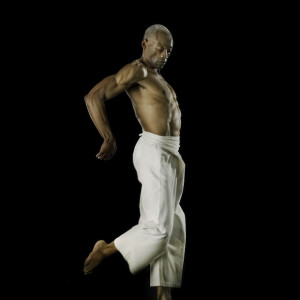
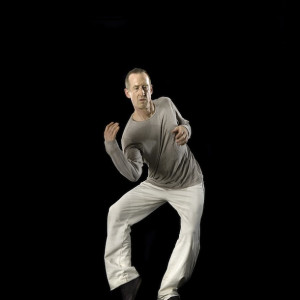
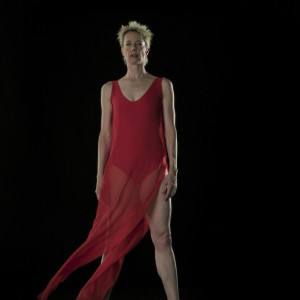
David Michalek’s film Slow Dancing will be showing at WOMADelaide 2014, March 7-10. This incredible film is made up of images of dancers that at first appear to be stills but are in fact super slow motion shots. Projected on three outdoor screens, each several stories high, the overall effect is breath-taking and magical. Amongst the many artists filmed are names such as William Forsythe, Dana Caspersen, Bill T Jones, Alexei Ratmansky. Dance Australia caught up with Michalek to find out more about Slow Dancing.
Michalek’s photography practice is informed by his interest in people. “My focus over the past ten years has been closely tied to his interest in the contemporary person, which I explore through the use of relational aesthetics, performance techniques, storytelling, movement and gesture,” he explains. “I am as interested in working with any and all kind of human beings, but dancers have a special place in my heart. William Carlos Williams said that poets write for a single reason—to give witness to splendor. This is also why, I think, dancers dance. Susan Sontag once pointed out that "no art lends itself so aptly as dance does to metaphors borrowed from the spiritual life (grace, elevation)..." But I also believe that certain harder and rougher metaphors borrowed from the life here below (gravity, striving, failing, falling) are equally important to what dance is and who dancers are. To paraphrase Simone Weil, grace is also the law of the descending movement—some people fall to the heights.”
This “special place” for dance” is part of the inspiration for the film, says Michalek. “I love dance. I love watching it,” he remarks. “I love what dancers do, who they are, and what they stand for. Dance is an underappreciated art form—the NEA tells us that only eight percent of the U.S. population will ever see a live dance performance. This led me to the idea of making a visual statement centered on celebrating dance—but not limited to any one kind of dance—to try to capture the "essence" of dance in a different medium.”
Slow Dancing is also informed by Michalek’s interest in time. “I was compelled to consider how the addition of extreme slow motion could be applied to dancer’s dancing in a way that could both enhance and alter the already latent meanings contained within them,” he remarks. “As a visual strategy, extreme slowness creates a continuing sense of pause within the action—as if the growth and evolution of the slow-moving image is itself a further manifestation of the absorptive state. Therefore, the use of high-speed photography as applied to recording dancers seems a good match waiting to happen.”
And then lastly, says Michalek, the film grew from his innate desire to make portraits. “The best portraits teach me how to look longer and harder and deeper at my fellow human beings,” he reflects. “As a portrait artist, this is what I strive to do. I could make a portrait of anyone, anywhere and be happy doing so, but there is a certain pleasure in having dancers as one's subject.”
More info about Slow Dancing at WOMADelaide: www.womadelaide.com.au
Watch a preview of Slow Dancing here: