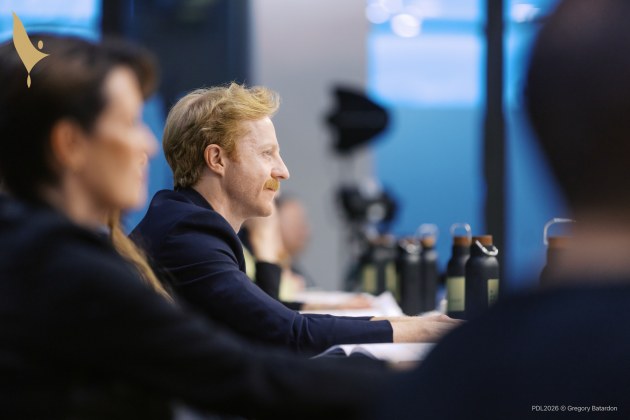
When Steven McRae won the Prix de Lausanne in 2003, the format was stark. Dancers were eliminated daily. The stage was still raked. The atmosphere, he recalled, could feel unforgiving.
“Extraordinary event. It’s changed.”
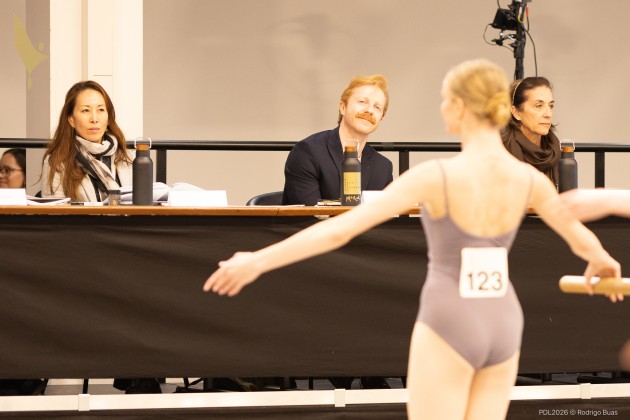
More than two decades later, he returned not as competitor but as juror. The shift in perspective mirrored the shift in the competition itself.
“It’s far more of an experience for the young dancers.”
Where once the structure emphasised survival, the contemporary Prix unfolds as a week of coaching, classes, health seminars and conversations with directors from across the globe. The competitive element remains, but it no longer defines the whole.
“There’s a far more human element to it now.”
That word, human, carries particular resonance in ballet. It is an art form so often assessed in lines and degrees, yet sustained by connection. McRae is clear that technique, while essential, is not the ultimate measure.
“For me, it’s about seeing the human.”
“If you want to reach across the orchestra pit and grab the heart of the audience, they’ve got to relate or see something within you.”
It is a perspective shaped not only by a long career with The Royal Ballet, but by experience of the industry’s physical demands. Wellness and longevity now form a visible part of the Lausanne program, aligning with broader cultural change in the profession.
“If you’re coming to this competition, by this stage you’re probably thinking you want to enter the profession. So what a great opportunity for the dancers to be introduced to some of those elements.”
Lausanne, he noted, was already forward-thinking in 2003. Medical checks were in place. What was once progressive has become foundational.
“If the top are doing it and shouting loud enough, then yes, it will trickle down. But the reality is it has to start from the day a dancer steps into the studio for the first time.”
For McRae, that responsibility rests first with teachers. He speaks with reverence about his own Sydney mentor, Hilary Kaplan.
“Don’t teach because you think that’s what you should do; teach because you have to. It’s your passion. You have to do it because that is the absolute passion, not just because it’s something to do.”
Teaching, in his view, is not a fallback but a vocation. The earliest studio experiences shape not only bodies but mindsets. A healthy outlook must be embedded from the beginning.
On the Lausanne stage this year, technical assurance was assumed. What distinguished one dancer from another was less tangible.
“Your technique is something you never stop working on. It’s constant. But your artistry is also the same. You never stop developing and evolving as an artist.”
He is wary of the idea that any milestone constitutes arrival.
“When you maybe get offered your first contract, when you get your first big role, it’s all wonderful. But they’re stepping stones. None of it is ever a finished product.”
Rather than treating the week as a verdict, he reframes it as a marker.
“It’s about celebrating where you are now. You’ll look back in 10, 20 years’ time and look proudly at this time, but also have a little giggle and go, ‘Wow, I was so young.’”
Upstairs in the theatre foyer, past laureates line the walls. With hindsight, their trajectories appear inevitable. At the time, they were simply numbers on a program.
McRae knows what it means for Lausanne to open a door. His 2003 win led directly to the Royal Ballet School and, soon after, a place in the Royal Ballet company. Yet he is careful not to reduce the Prix to medals alone.
“The whole Prix experience is about networking. Meeting people. Being introduced to people. That’s a skill dancers will take with them throughout their whole career.”
He recalls being told that every competitor last year received an offer of some kind after the competition.
“That’s extraordinary.”
For dancers from smaller schools or families without industry connections, Lausanne can represent visibility on a global scale.
“Many kids just don’t have access. They can’t get on a plane and fly to every country. Or they come from families that have no idea about this world. Where do you even begin?”
The value, he suggests, lies in being seen.
Of his own experience in 2003, he speaks with candour.
“I genuinely wish I enjoyed it more. I found the whole week so overwhelming.”
It was just him and his mother in Switzerland. He describes operating in defence mode, focused on surviving each day rather than absorbing the atmosphere.
“I didn’t appreciate the level of the classes. I didn’t find time to look around and take inspiration from others.”
His advice to young Australians watching from afar is direct.
“Get rid of this preconceived idea of perfection. It doesn’t exist. It’ll never exist.”
He sees a generation fluent in comparison, hyper-aware of peers’ pirouette counts and extensions.
“Get off your phones. Stop comparing yourself. Yes, get inspiration. But learn who you are. Who are you as an artist? What can you bring to the art form?”
Uniformity does not interest him.
“We don’t want 100,000 of the same. We want 100,000 unique characters within the art form.”
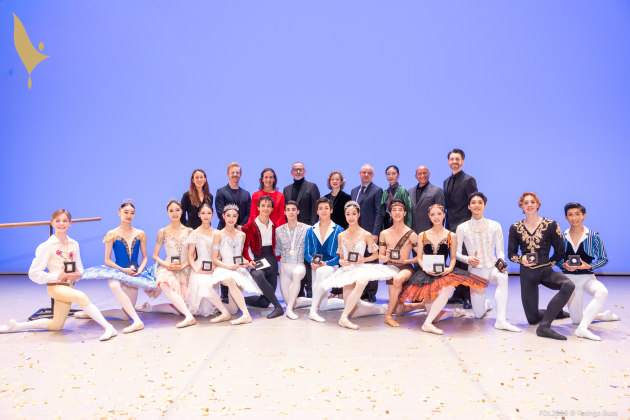
Scholarships were awarded in Lausanne. Contracts will follow. Careers have already begun to shift.
But for McRae, the more significant shift is cultural. The Prix no longer frames success solely as victory. It frames it as development, exposure, connection.
You do not have to win gold to build a career. You do not arrive at 17.
What matters is that you are evolving. That you are curious. That you are learning who you are.
“We don’t want 100,000 of the same. We want 100,000 unique characters within the art form.”
In a competition once defined by elimination, that may be the most important evolution of all.