


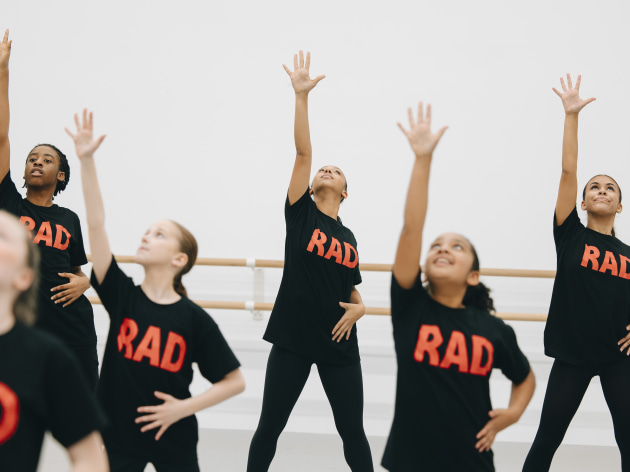
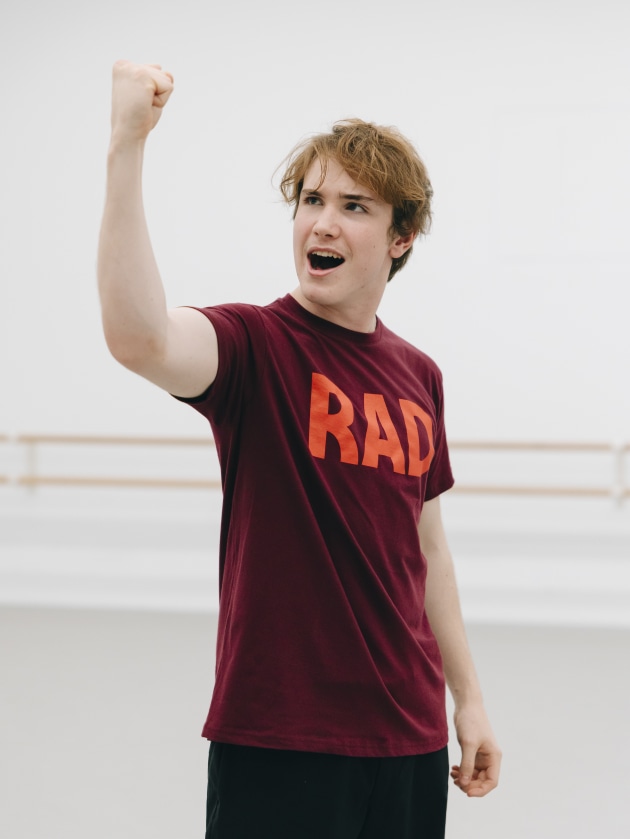
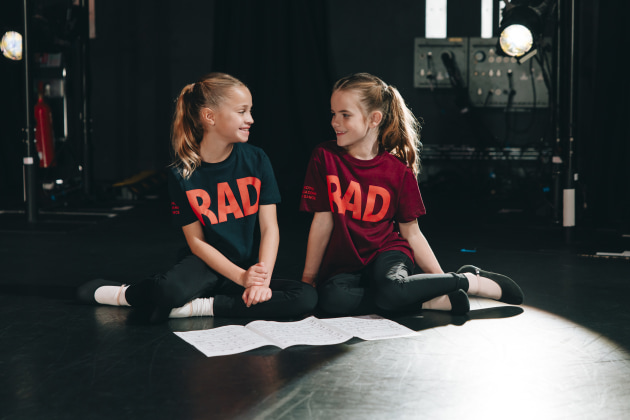
The Royal Academy of Dance has launched a new Musical Theatre syllabus, marking a significant expansion of the organisation’s global training programme beyond its traditional ballet base.
The syllabus has been designed as a structured pathway for the next generation of musical theatre performers, with training offered from Primary level through to Grade 8. It places equal weight on acting, singing and dance, reflecting an industry in which young performers are increasingly expected to arrive as genuine “triple threats”, with the versatility to move between dialogue, song, choreography, audition rooms and self-tapes.
The launch is a notable shift for the RAD. For more than a century, the organisation has been closely associated with ballet training and examinations. This new syllabus broadens its performing arts offer, positioning musical theatre as a discipline requiring the same kind of progression, technical structure and assessment rigour that has long underpinned its dance programmes.
The syllabus has been developed in consultation with musical theatre specialists, industry professionals and RAD teachers. According to the RAD, it responds to the evolving realities of the profession, where vocational pathways are increasingly competitive and students are required to demonstrate not only performance ability, but also confidence, communication, critical reflection and practical audition skills.
The graded examinations are Ofqual regulated, with UCAS tariff points available at Grades 6 to 8. Through the RAD’s global network of registered teachers, the programme is intended to offer students a recognised pathway that can support progression into further education, higher education and vocational training.
At the centre of the syllabus is its equal weighting of acting, singing and dance. Rather than treating musical theatre as an extension of one discipline, the RAD has structured the syllabus so that each area is developed progressively and assessed with comparable weight. The aim is to give students from different training backgrounds a clearer and more balanced route into musical theatre study.
The syllabus also incorporates choreography from major West End and Broadway creatives, including Tony and Olivier Award-winning director and choreographer Susan Stroman, British Tony Award-winning director and choreographer Warren Carlyle, Olivier Award-winning choreographer Matt Cole and Olivier Award-winning choreographer Stephen Mear CBE.
Alongside performance training, the syllabus includes project-based learning, discussion with examiners and a growing emphasis on context, storytelling and stagecraft. In later grades, students are expected to analyse character, reflect on their practice and use appropriate terminology to communicate ideas clearly. At higher levels, the assessments move closer to professional practice, with students developing audition portfolios and, at Grade 8, completing a self-tape audition.
Australia's own Alexander Campbell, Artistic Director of the Royal Academy of Dance, said the syllabus had been created to meet the demands of a changing sector.
“Our goal is for this syllabus to be welcomed as a major step forward in Musical Theatre education by students, teachers, theatre and performing arts schools alike,” Campbell said. “The framework we have created meets the needs of this evolving sector by training versatile students skilled across dance, acting and singing, and equipping them for the industry of today.”
He added that the syllabus also places importance on musical theatre history and context.
“It is my personal belief that performers are stronger and more effective if they are rooted in the history of the art form they are performing and therefore represent,” he said.
For Campbell, the launch represents a new chapter for the RAD.
“The creation of this new syllabus marks the start of new chapter in the RAD’s history as it broadens its global training offer beyond ballet to include well-rounded, relevant and exciting performing arts education which is accessible to all.”
Stroman said the inclusion of choreography by Broadway and West End professionals would help place dance at the centre of musical theatre training.
“I am thrilled to collaborate with the Royal Academy of Dance as they launch their new Musical Theatre syllabus,” Stroman said. “By bringing choreography created by Broadway and West End professionals into the training, we’re putting dance on equal footing with dialogue and song. I am honoured to share my work with the RAD’s global community, and I hope students and teachers have a fabulous time bringing my choreography to life in their studios.”
Carlyle described the syllabus as a way to connect young performers more directly with the industry they hope to enter.
“It will be a privilege to share my choreography with young performers from across the world,” he said. “It is vital, I feel, within our industry that we, as a whole, deliver training which is long lasting, and, for me, it was fantastic to see that the Royal Academy of Dance’s new syllabus has been carefully designed to connect young performers with the Musical Theatre industry.”
He said the work should challenge students creatively while also reminding them of the pleasure of performance.
“It should challenge them creatively, expand their own practice and help them grow, and I want to be at the heart of reminding them that Musical Theatre is also about connection and the sheer joy of performing.”
Cole, who is also Principal of Laine Theatre Arts, said the syllabus could provide a more formal structure for students preparing for professional training.
“The new RAD Musical Theatre syllabus will provide all-important benchmarks and structured progression for students of all ages,” he said. “It will help prepare students for professional training, overcome challenges and improve their confidence, to enhance their overall performance skills.”
He also pointed to the wider significance of the programme.
“Crucially however, the syllabus has the potential to level the playing field in the Musical Theatre industry. More broadly, the syllabus will help recognise and formalise Musical Theatre as its own discipline that contributes significantly to the UK’s cultural and economic landscape.”
Mear said he hoped the syllabus would help students understand dance as a vehicle for character and narrative.
“Dance possesses a remarkable ability to convey narrative and express character, and I am excited to share my repertoire to help students explore these vital elements,” he said. “I hope it ignites their passion for dance and enhances their performance skills, as this craft means so much to me.”
Teacher training courses will be offered through the RAD from July 2026 in London, followed by Manchester in October 2026 and Birmingham in January 2027. International teacher training will also be available in Canada in July 2026 and Australia in October 2026.
Musical Theatre classes and examinations will be available to book from September 2026.