

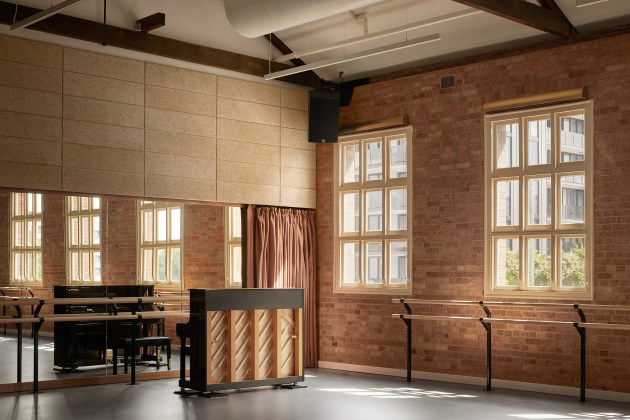
Queensland Ballet has announced a significant development in its training model, with all Academy programs to be based at its headquarters, the Thomas Dixon Centre, from 2027.
The move brings the organisation’s full training pathway under one roof, aligning students more closely with the day-to-day life of the Company while maintaining distinct stages of development across each program.
Artistic Director Ivan Gil-Ortega framed the change as both a practical and artistic evolution, drawing on his own experience of training in close proximity to a professional company.
“This evolution strengthens the bridge between training and Company life. I trained at the John Cranko School next door to Stuttgart Ballet, and that proximity shaped my understanding of professional standards and artistic expectations. By aligning our Academy and Artistic programs at the Thomas Dixon Centre, we are offering dancers that same clarity, while ensuring each stage of their development remains purposeful and earned.”
Director of the Academy Christian Tàtchev emphasised that the consolidation is about continuity rather than compression, with each level of training retaining its specific focus.
“The Academy has grown significantly over the past decade, expanding across age groups and training models. Aligning our programs within one artistic home allows students to see where their training leads, without removing the distinctions that are essential to dancer development. Each program remains focused on its purpose.”
The new model reflects a broader shift in international training structures, with increased emphasis on long-term development, age-appropriate progression and dancer wellbeing. The Academy’s existing framework already prioritises these areas, with training designed to build technical foundations gradually, balance workload, and support students physically and psychologically throughout their development.
Importantly, the changes are not being positioned as a cost-cutting measure. While consolidating programs within a single site may bring operational efficiencies, the organisation has confirmed that the decision is an artistic and pedagogical one, focused on strengthening outcomes for students and long-term sustainability.
For students, the most visible shift will be closer proximity to the Company. Training within the same environment offers regular exposure to professional dancers, visiting artists and the wider artistic team, as well as a clearer sense of progression from early training through to employment pathways. The Academy’s 2027 prospectus describes this as “daily immersion to professional practice and standards” and a “clearly defined progression from early training to professional readiness”.
That pathway is already well established. Queensland Ballet reports that more than half of its current dancers are Academy graduates, with the structure extending through to the Jette Parker Young Artist Program, which bridges training and full company contracts.
Questions around the future of individual programs are likely to follow the announcement, particularly in relation to junior and part-time streams. Queensland Ballet has indicated that the intent is not to reduce access points, but to bring them into closer alignment within a single artistic framework.
The Academy’s multi-tiered structure will continue, spanning early training through to pre-professional and post-secondary levels. Associate programs remain a key access point for students outside the full-time pathway, with Brisbane-based students continuing in after-school training and interstate and regional students attending intensive blocks. Under the new model, these cohorts will increasingly come together, with local and visiting Associate students training alongside one another during intensives. The aim is greater consistency across the program, while retaining flexibility for students balancing academic study with their training.
Further details will be released throughout 2026 as transition planning progresses, with local teachers already being invited into discussions with Tàtchev.
Olivia Weeks