

DAY 7: RISING STARS PERFORMANCE
Olivia Weeks and Emma Sandall recap Day 7
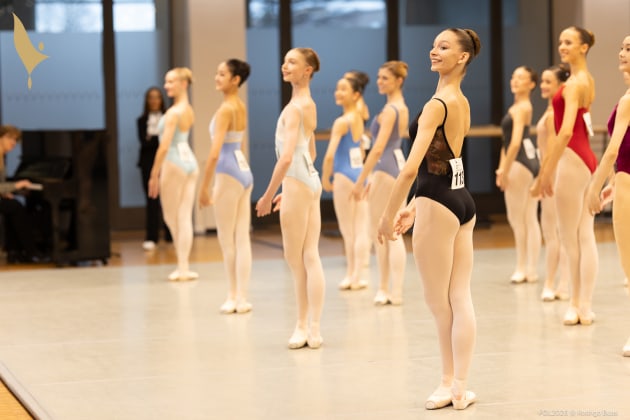
The Rising Stars performance offered a buoyant and generous close to the 54th Prix de Lausanne. With the pressure of competition behind them, the finalists returned to the stage with an ease and openness that brought new colour to their variations, allowing musicality, risk and individuality to come to the fore.
The program also saw a return of the Partner School Choreographic Project, whose performance again highlighted the collective spirit that had developed over the week, alongside guest appearances from Paris Opera Ballet artists Inès McIntosh and Shale Wagman. Together, these elements gave the afternoon a sense of continuity and celebration, drawing the focus outward from results and back onto the joy of performance.
Seeing the dancers, choreographic project and guest artists share the stage one final time brought the week to a warm close, sending audiences out of the Théâtre de Beaulieu with a sense of momentum and anticipation for what lies ahead.
Dance Australia’s 2026 Prix de Lausanne coverage is generously supported by Bloch Australia.

DAY 6: FINALS
Olivia Weeks and Emma Sandall recap Day 6
The Finals of the 54th edition of the Prix de Lausanne brought the week almost to a close with an afternoon of remarkable breadth and emotional resonance. Twenty-one finalists returned to the stage to perform their classical and contemporary variations once more, this time within the heightened atmosphere of the Finals. Guest performances from the Paris Opera Ballet and the Royal Danish Ballet sat alongside the finalists’ work, offering a clear reference point for the professional standard these young dancers are approaching.
A particularly exciting moment came with the fully staged presentation of the Partner School Choreographic Project. Performed in full, The Gathering, choreographed by Edwaard Liang, felt both generous and deeply considered. Created over just eight days, the work revealed how quickly this group of young dancers had formed a sense of collective identity, becoming, if only briefly, a company. It stood in clear contrast to the competitive pace of the week. The evening also included the presentation of the Lifetime Achievement Award to Sylvie Guillem, whose speech was delivered with characteristic personality and gusto- though entirely in French, making it somewhat more difficult for the non-Francophiles. It didn't matter ultimately; the entire audience was as enamoured of 'Mademoiselle Non' as they have always been, and she received a standing ovation that lasted minutes.
Fourteen scholarships were awarded during the ceremony, a life-changing outcome for those dancers recognised on stage. Full news of this can be found on Dance Australia tomorrow.
I had the pleasure of sitting with several of the dancers during the Finals, which offered a different perspective on the afternoon. Their reflections on the performances were thoughtful and measured, revealing an awareness of artistry and process that felt well beyond their years. Listening to them respond to what they were seeing on stage underscored just how deeply engaged they have been throughout the week, not only with their own work, but with that of their peers.
As the Finals progressed, another aspect of the Prix unfolded. Candidates who were not finalists began receiving news of offers made through the class held this morning for Partner Schools, starting conversations that will continue over the coming days and weeks. Being present for some of these moments was a gentle reminder that, despite the professionalism and composure they have shown all week, these dancers are still very young adults, navigating the excitement and uncertainty of what comes next. I did have a particularly enjoyable conversation with one of the younger European dancers, who assured me she will be returning in the future- this year was seeing what it is all about! I will be following her with interest!
Dance Australia’s 2026 Prix de Lausanne coverage is generously supported by Bloch Australia.
DAY 5: SELECTIONS
Olivia Weeks and Emma Sandall recap Day 5
Day five brought the week to its emotional and artistic peak, with selections unfolding after an exceptionally long day in the theatre. Each candidate presented both their classical and contemporary variations, a demanding structure that required sustained concentration from dancers and jury alike. What unfolded on stage felt less like a competition than a gala of potential. Energy understandably dipped slightly at moments, but the overall standard remained strikingly high, with performances that carried weight, clarity and maturity well beyond the dancers’ years. Seeing the candidates in costume and under full stage conditions offered a very different perspective to the studio work earlier in the week, revealing who was able to draw everything together in the moment. The theatre was full, and the audience was incredibly responsive to all dancers, who surely felt and heard the appreciation of their performances.
There were performances that quite literally took the breath away. Some dancers who had been consistently strong all week continued to impress, while others emerged with unexpected authority once placed on stage. Among the boys, the classical variations delivered moments of extraordinary elevation and flair, while the girls displayed incredible elegance and control in some very difficult pieces of repertoire.
The contemporary dances also resonated deeply- particularly for Emma, especially the Young Creation Award works, which felt instinctively aligned with the dancers performing them. There was a palpable sense of connection to the material, and an emotional stillness in the theatre as Louise Deleur’s works were danced with great care and sensitivity, beautifully rehearsed by Amelia Waller. With Louise’s sister present in the audience, it was a beautiful reminder of the lasting impact of Louise's voice within the Prix.
Before the finalists were announced, Artistic and Executive Director Kathryn Bradney and Prix de Lausanne Board President Olivier Glauser addressed the candidates, acknowledging not only the standard of work presented this week, but the shared experience itself. As Glauser reminded the dancers, whatever the outcome, they are now part of something larger than a single result. This year’s selections resulted in 21 finalists following a tie, with the following dancers moving through to the Finals of the Prix de Lausanne 2026
Finalists – Prix de Lausanne 2026
- 306 Tae Eun Kim (South Korea)
- 418 Mingyun Son (South Korea)
- 107 Pietra Rego de Souza (Brazil)
- 202 Nikhil Sengupta (United States)
- 308 Lisa Ito (Japan)
- 201 Yusei Sai (Japan)
- 424 William Gyves (United States)
- 309 Ara Shin (South Korea)
- 206 Blake Metcalf (United States)
- 413 Dragos Gramada (Romania)
- 112 Xiner Liu (China)
- 203 Jetro Thijs (Belgium)
- 301 Jingxinyu Huang (China)
- 417 Suhyeok Bang (South Korea)
- 310 Jiyul Jeon (South Korea)
- 406 Haowen Lu (China)
- 213 Yufei Cao (China)
- 302 Dayeon Yeom (South Korea)
- 415 Milo Demeulenaere (United States)
- 304 Sarah Maione (Italy)
- 314 Daeun Chung (South Korea)
We are immensely proud of our three competitors, Jessica Cooper of Australia, Nina Penny of Japan and Australia, and Tamison Soppet of New Zealand. Across the week, they have delivered outstanding work in classes and rehearsals, culminating in assured, generous performances on stage today. Each has navigated the demands of this experience with remarkable stamina, good humour and grace, meeting every challenge with clarity and quiet confidence. They have been a joy to watch and a genuine pleasure to support, and we look forward to following their journeys as they continue to grow as artists on the international stage.
Dance Australia’s 2026 Prix de Lausanne coverage is generously supported by Bloch Australia.
DAY 4
No video recap accompanies today’s coverage due to scheduling constraints.
Day four saw the girls’ classical coaching with Clairemarie Osta move fully onto the Théâtre de Beaulieu stage, and the shift in setting made the dancers’ progress especially visible. Notes given in yesterday’s studio sessions had clearly been taken away, considered and applied, with many dancers showing a stronger sense of detail and intention in their work today. Across the group, there were some signs of both nerves as selections approach and physical fatigue from the intensity of the week, but the overall stamina on display has been impressive. On stage, there were more moments where personality began to emerge more freely within the variations, offering a glimpse beyond technical command and into the artistry. While the consistency of certain dancers has been evident all week, today’s work on stage allowed other performances to quietly emerge.
The Partner School Choreographic Project students began their morning with class led by Paris Opera Ballet School Director Élisabeth Platel, an experience the Australian dancers spoke very positively about. Coming off the debut of their new work in rehearsal mode at last night’s Young Creation Awards finals, the group then faced a demanding five-hour rehearsal block later in the day. Despite navigating a rehearsal schedule that rivals many professional companies, it's clear these dancers are enjoying both the work and their time with each other.
Emma Sandall spent the day observing the contemporary classes, with updates to come.
It was also a pleasure to spend time this afternoon interviewing Queensland Ballet Academy Director and 2026 Prix jury member Christian Tatchev. His reflections were, as always, thoughtful and grounded, shaped by a clear awareness of the dancers’ youth and the responsibility that comes with observing them at this stage of their development.
With the jury having now seen the candidates across classwork, tomorrow marks a significant moment. The dancers will take to the stage for selections, performing both their classical and contemporary variations after a week of sustained focus and preparation. Expectations from the jury, teachers and audiences are understandably high, and after watching the process unfold across the week, there is little doubt they will be met, and in many cases surpassed.
Dance Australia’s 2026 Prix de Lausanne coverage is generously supported by Bloch Australia.
DAY 3
Emma Sandall and Olivia Weeks recap Day 3
Day three at the Théâtre de Beaulieu brought a shift in focus to the stage, as the candidates moved into the final stages of refining their repertoire. The atmosphere has evolved from the initial immersion of the first two days into a state of relaxed but hyper-focused energy, particularly as the dancers worked directly with the classical and contemporary coaches in the theatre.
The morning was dedicated to classical variations, with the Boys B cohort working on stage under the guidance of Federico Bonelli. Emma noted the session was sensational, offering a fascinating look at how these young dancers—already highly trained—can adapt and pull even more from their work when pushed by coaches of such high caliber. Simultaneously, the Girls A variation coaching with Claire-Marie Osta highlighted a beautiful artistic connection, with the Australian and New Zealand candidates appearing visibly encouraged by the detailed feedback on their artistry.
In the afternoon, the focus turned to the contemporary repertoire, where the ability to adapt and take on corrections was put to the test. A new addition to this year’s repertoire, Mauro Bigonzetti’s The Nutcracker, made its debut on stage, alongside works like Goyo Montero’s variations and Henry Lichtmacher’s 20 Miles from Shore. This second day of contemporary coaching allowed observers to see how quickly the candidates could integrate specific stylistic demands into their performance.
A different sort of highlight of the day for Dance Australia was an exclusive interview with Steven McRae, Principal Dancer with The Royal Ballet and a former Prix de Lausanne winner in 2003. McRae, who is serving as a member of the jury this year, provided some incredibly insightful advice for the current competitors and aspiring dancers back home in Australia. Chatting with Steven emphasised the powerful link between the competition's heritage and the next generation of talent currently on stage
The evening concluded with the high-stakes Young Creation Award, a mind-blowing showcase that confirmed the future of choreography is in very gifted hands. After watching five original works, the two winners were announced: Metz Cohen and Kyra Wensloff. Their variations will now be integrated into the Prix de Lausanne repertoire for the 2027 candidates to perform. To top off the night, the Partner School Choreographic Project gave a gorgeous preview of their progress; though they only began working together four days ago, their stage rehearsal demonstrated a level of cohesion that felt far more established.
Dance Australia’s 2026 Prix de Lausanne coverage is generously supported by Bloch Australia.
DAY 2
Emma Sandall and Olivia Weeks recap Day 2
Day two at the Théâtre de Beaulieu was marked by a sharpening of focus and a noticeable shift from the tentative energy of the opening day to a more settled, professional atmosphere. The first day jitters largely evaporated, replaced by a sense of immersion as the candidates became more familiar with the framework of the week.
The distinct change in the atmosphere was also obvious within the Partner School Choreographic Project space. The group has begun to operate like a newly formed company, moving past the individual jitters of day one to work with a collective focus that is truly great to witness. This sense of ensemble was further echoed after their morning classical warm-up, where the dancers fell easily to rehearsing the choreography solo or in small groups. The work promises to be powerful, based on what we saw today, but we will see more in the full rehearsal tomorrow evening.
In the studios, the technical demands reached a new peak with the Girls B class, led by Élisabeth Platel, Director of the Paris Opera Ballet School. While the exercises were notably difficult- and fast, the dancers mostly met them with a growing sense of familiarity and command, particularly given the jury was present. This same professional maturity was evident as the Boys B cohort moved onto the main stage for their contemporary marking. Emma noted that watching them navigate these pieces was a highlight for her, particularly as they began to "rely more on their own musical and spatial choices" while testing how they respond to different teaching styles.
The contemporary coaching sessions across the Male and Female Groups A and B provided a fascinating look into the dancers' developing artistry. Working through a diverse repertoire—ranging from the intricate dynamics of Mauro Bigonzetti’s Rossini Cards to the grounding of the late Louise Deleur’s Touch, Feel, Sense—the candidates were given space to find their own voices. While coaches like Vincenzo Capezzuto and Amelia Waller provided expert artistic guidance, there was a palpable sense of autonomy in the room. The mentors seemed to intentionally allow the dancers the freedom to interpret accents and nuances for themselves, ensuring that each variation remained a personal expression rather than a carbon copy.
This layer of discovery was supported by the constant, subtle presence of the interpreters for many of the selected candidates, acting as a vital bridge not just for corrections, but for the nuances of what they're being told in those high-pressure moments on stage.
Off-stage, this spirit of support translated into a genuine camaraderie, with candidates practicing together in the wings and helping one another navigate the day. It goes without saying that the level of focus of all dancers in phenomenal. These students, from all over the world, are absolutely not going to waste a second of time over here.
The evening concluded with an insightful conversation with the nine-member jury, presided over by Kevin O’Hare. The discussion was a grounding reminder of the human element behind the assessment. The jurors, some of whom are former prize winners themselves, spoke with a deep empathy for the candidates, recalling their own experiences on this very stage. Their collective message was clear: this week is a "snapshot" of a much larger journey. By encouraging the dancers to "play the long game," they emphasised that the true value of the Prix de Lausanne lies in the process, the connections made, and the artistic growth that transcends the marks on a sheet.
Dance Australia’s 2026 Prix de Lausanne coverage is generously supported by Bloch Australia.
DAY 1
Emma Sandall and Olivia Weeks recap Day 1
Day one at Prix de Lausanne marked the first full day of public-facing activity, with audiences now able to observe classes, rehearsals and run-throughs across studios and theatre. While candidates arrived yesterday (February 1st, or “Day 0”) for orientation, today introduced an added layer of focus as dancers began working with observers present throughout the schedule.
The morning opened on stage with the Group A female classical variations. Even at run-through level, and without the jury present, the standard was immediately apparent. There was a particularly pleasant breadth of variation choices on display, offering stylistic contrast alongside substantial technical challenge. Those demands were being met with assurance, musical clarity and a confident command of space, notable this early in the week.
Contemporary class for the male dancers followed, led by Sarawanee Tanatanit. Three interpreters were positioned around the studio, ensuring instruction was fully accessible and allowing the class to progress with momentum and nuance (this is a feature across all classes). Sarawanee’s teaching was notably engaging, grounded in imagery and intention rather than correction alone. One instruction to the boys resonated strongly: “Always be connecting. Be like water, always circulating.” It encapsulated the tone of the class, which prioritised continuity, awareness and flow.
The musical landscape of the class played a significant role. Accompanist Paul Pavey, a multi-instrumentalist musician and composer, provided accompaniment of remarkable depth and responsiveness. His playing elevated the work in the room, shaping phrasing and texture in a way that dancers clearly fed from, adding weight and dimensionality to the movement.
The female Group A contemporary class followed and was likewise excellent. Focused yet fluid, the dancers moved with growing confidence through Sarawanee’s material, demonstrating a strong collective responsiveness to both musical and spatial cues. The continuity between the two groups underscored the clarity of the teaching and the dancers’ ability to absorb and apply it quickly.
From her dual vantage point in the studio and on the livestream, Dance Australia writer and Prix livestream commentator Emma Sandall observed a day defined by listening and adjustment. Having watched parts of the younger men’s ballet class before commentating the Male B contemporary session, she noted how attentively the dancers were absorbing information, testing musical and spatial choices, and beginning to reveal how they respond to different teaching styles. For Emma, day one was less about projection and more about process, with dancers clearly focused on understanding the framework they will work within across the week.
With multiple classes and rehearsals running simultaneously across studios and the theatre, it was impossible to see everything in a single day.
The day concluded in the theatre with run-throughs of the Male B Senior classical variations. The level remained consistently (but expectedly) high, with strong technical command and many moments of exhilarating elevation, particularly in their tours. Even in rehearsal mode, the level of focus and purpose was unmistakable.
Away from the competitive schedule, time was also spent observing the Partner School Choreographic Project at the very start of its development. The shift in atmosphere was obvious. Here, dancers are creating collectively rather than being assessed individually. Led by Edwaard Liang, Artistic Director of The Washington Ballet and a former Prix Prize Winner in 1993, the studio felt open and conversational, with an easy rapport forming quickly between the choreographer and his cohort of international dancers. Framed by impressive Swiss mountain views, it seemed easy for the dancers to be inspired as the work took shape. It was sweet to witness a type of playfulness in this room; dancers not needed in the moment chatted quietly but freely, and a few steps (and tricks) could be seen on the side.
It was also a pleasure to see the Australian and New Zealand candidates throughout the day and to spend time speaking with them between sessions. Thoughtful, focused and generous in how they carry themselves, they are excellent representatives of their own journeys, their training institutions, and of the communities watching from home. Seeing them navigate this first day with both fun and poise was a great representation of the depth of talent coming out of our region.
Throughout the day, there was a strong sense of mutual encouragement among the dancers. New connections and friendships are already forming, some jumping language barriers by the look of it, and that collegial energy sits comfortably alongside the concentration required of the week ahead.
Dance Australia’s 2026 Prix de Lausanne coverage is generously supported by Bloch Australia.