Live dance is an ephemeral experience – it exists only in the moment of performance. This quality is heightened when a work involves improvisation – when the content is unfixed to some degree. Perth is about to host two Paris-based Australian dance artists who utilise improvisation as part of their choreographic practice. Rosalind Crisp and Andrew Morrish will present a double bill of self-devised, solo work – DANSE, by Crisp and Welcome to the Philobatterie by Morrish. Dance Australia caught up with Morrish to find out more about his work.
It’s safe to say that improvisation is central to Morrish’s work. “All my work is improvised, so my solo in Perth is still on its way! I use movement and voice in my work and have been doing it since 1982 when I started to work with Al Wunder in Melbourne,” he says. “I do not plan the content, and see the solo as a way to find the content, after 30 years of doing it I still am still delighted that it always seems to arrive just when I need it.”
That’s not to say that there isn’t preparation involved. “Of course, there is a skill base (and a whole lot of habits) in my work,” explains Morrish. “I have tried to develop my skill base through extensive and consistent practice.”
Morrish and Crisp will each present a workshop in Perth, in addition to their performances. Morrish’s workshop focuses on solo performance improvisation. “My desire is to create concrete activities that help participants feel that they have the reassurance of tools they can use while they perform to generate content. I also encourage people to be aware and very active with decision-making,” he remarks. “I always say that participants should come prepared to enjoy themselves , as following ones own pleasure as a performer is also one of the most efficient ways to make decisions.”
Although Morrish officially lives in Paris with Crisp (they are ‘real-life’ partners), the city really is just a base. “In reality I spend around eleven weeks a year there and travel for the other 41 weeks,” comments Morrish. “I am part of a wonderful improvisation community in Paris that has developed around my teaching, but I only teach and perform on average three times a year there.”
The benefits of having that European base are considerable, according to Morrish. “This year I will work in 21 cities in ten countries. Fifteen of the cities and nine of those countries are in Europe. Europe is a wonderful cultural environment to work in. This is partly because of relatively high levels of government support for the arts and also because of the cultural values which have such high status for such a long time in Europe.”
 Andrew Morrish. Photo: Paul Dunn.
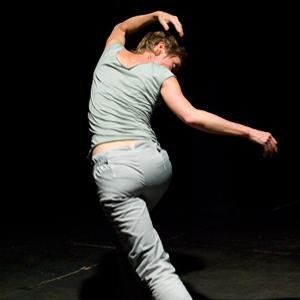 Rosalind Crisp. Photo: Anna Sole


