

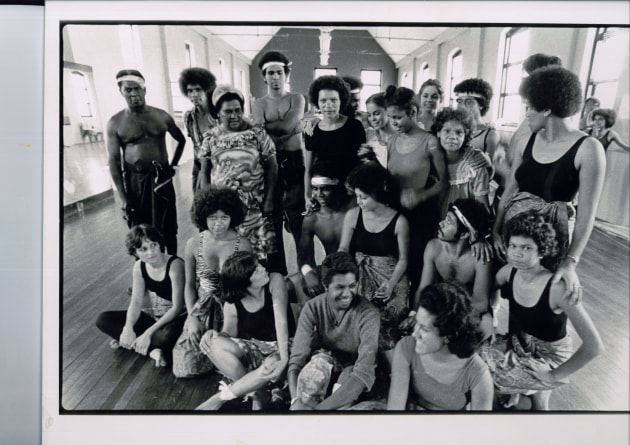
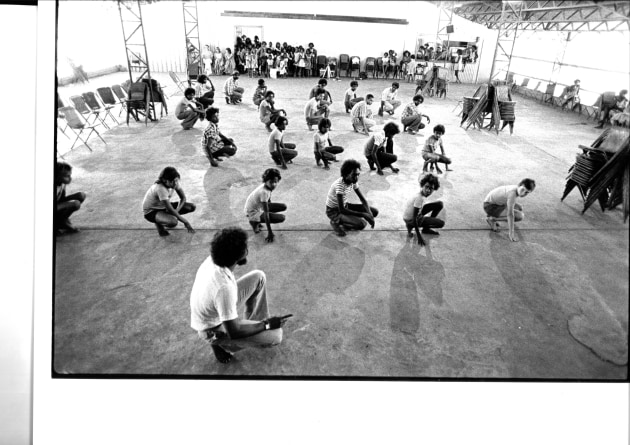
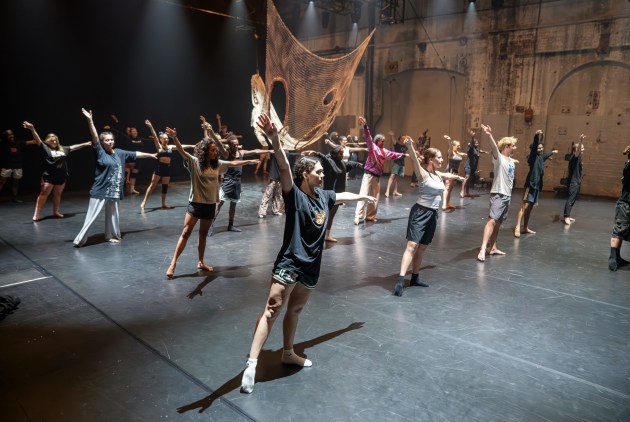
Fifty years is a long time in Australian dance, although for the world’s oldest living cultures it is a blink. That tension sits at the heart of NAISDA’s story. The college reaches its half-century at a moment when Australia is still learning how to engage with First Nations knowledge in ways that are respectful, reciprocal and structurally meaningful. Dance has often been the first place where these questions surface. It is also the place where answers, or at least pathways, begin to take shape.
NAISDA’s existence has always carried a provocation: what happens when an art form built on bodily tradition and inherited knowledge is taught within a westernised training model, yet refuses to be absorbed by it? The college grew out of community workshops, political momentum and a hunger for Indigenous young people to claim space through movement. What emerged was not simply a training institution, but a framework for artistic sovereignty. NAISDA embedded cultural learning, story, language, kinship obligations and the authority of Elders into the architecture of its teaching. It became a site where artistic development could not be separated from cultural continuity or collective responsibility.
This may be NAISDA’s most significant contribution to Australian dance: the articulation of a pedagogy in which First Nations knowledge guides the learning environment from the inside out. In the early years, this approach defied the norms of institutional training. Today, it reads as essential, particularly as arts organisations reckon with questions NAISDA has long worked through in practice. Who has the right to tell which stories? What does rigour look like when cultural accountability is part of the training? And how do we build spaces where the body is recognised as a vessel of memory rather than merely an instrument for perfecting technique?
Answers are embedded within NAISDA’s curriculum. Students learn not only in studios but through cultural residencies in remote communities, guided by the custodians of the dances they study. This shifts learning from representation to relationship. The emphasis is on process: on listening, observing, moving with care, and acknowledging the sources of knowledge being shared. In a sector often focused on product and visibility, NAISDA models a different kind of artistic time, one that respects the slow, accumulative nature of embodied cultural learning.
That philosophy flows into a holistic approach to student wellbeing. NAISDA recognises that training cannot be isolated from the realities young people carry with them: responsibilities to family, the emotional demands of living away from home, the pressures of navigating two cultural worlds. Its First Nations wellbeing framework connects education with cultural, social and emotional support. This is not an add-on to the training; it is a recognition of the conditions required for young artists to thrive.
Perhaps the most striking measure of NAISDA’s first fifty years is the clarity of its purpose. Despite shifts in policy, funding structures and public discourse, the college has remained anchored to the values present at its beginnings: cultural integrity, excellence, connection and leadership. This continuity has produced generations of artists who enter the wider arts ecology with a distinctive understanding of cultural responsibility. Their presence has altered rehearsal rooms, creative processes and institutional expectations, not through force but through the authority of knowledge shaped by training that honours both culture and craft.
Looking ahead, NAISDA’s next chapter is already taking form. The barayi badhang: Spirit Ground cultural and creative learning centre represents a profound shift in how Australia conceives First Nations arts education. Designed through Country-led principles, Spirit Ground will expand NAISDA’s scope into production, design, dancefilm, arts administration, dramaturgy and leadership. It imagines a future in which First Nations creative practice is recognised as foundational to the nation’s cultural life. Its significance is not in offering more programs, but in reframing the landscape: First Nations-led training becomes a national anchor rather than a specialised stream.
Perhaps the strongest expression of NAISDA’s meaning comes through the words of Wiradjuri artist and alumna Vicki Van Hout. In The Legacy, she evokes the early dancers whose bodies “announced that we too are here… and will always be here,” and the performers who danced injustice, survival and sovereignty into public view. Her poem is a reminder that NAISDA’s history is not abstract. It lives in the bodies of those who trained, performed and carried stories forward when few were willing to listen.
Fifty years on, NAISDA continues to show that cultural strength and artistic innovation are deeply aligned. Its graduates demonstrate that excellence emerges when artists are supported, culturally grounded and empowered to speak through movement. As Australia considers the future of its cultural landscape, NAISDA’s model offers something rare: a blueprint shaped by half a century of listening to Country, to community and to the young people who arrive ready to dance their way into the world.
The question now is how the wider sector chooses to respond. NAISDA has been imagining the future for fifty years. The nation has an opportunity to meet it with the respect, investment and understanding that such vision deserves. 