

By Susan Reiter in New York
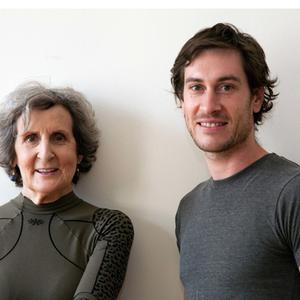
Lee Serle’s timing could not have been better. The year the Melbourne-based dancer spent working with the veteran innovator Trisha Brown in New York, after being selected by the Rolex Mentor & Protégé Arts Initiative, coincided with Brown’s 40th-anniversary, and included a whirlwind of creative activity. Groundbreaking early works were revived while Brown also prepared a new work for a recent Paris premiere.
“It was a big learning year. When I first got to New York, I was doing a lot of observing. And then over time, opportunities to perform and learn different roles came up,” he said in New York in mid-November. During his mentorship year (June 2010 to June 2011) he performed in an early Brown work, Walking on the Wall, that had eight dancers calmly striding across the walls of a Whitney Museum gallery, their bodies cantilevered at 90-degrees, as well as in two mid-period works in a more conventional theatrical setting. “I actually didn’t know what to expect when I got here. The full experience exceeded anything I could have imagined. It was really great to be able to get the full spectrum of her work, and have an opportunity to perform works from different decades. It’s quite amazing to understand where her movement language came from -- the kind of experimentation. In her current works, you see where it has developed from her early days in ‘60s and ‘70s.”
Serle returned to New York in October; he and Neal Beasley performed the premiere of Rogues -- a duet drawn from material in the large new work Brown made for Paris -- at the prestigious, highly popular Fall for Dance Festival. Its intricate clarity was praised by New York Times critic Alastair Macaulay, who described the duo as “enthrallingly displaying how an impulse that begins in a shift of the torso or a lift of the arm can create a momentum that the body, effortlessly it seems, converts into a phrase of shape and texture.” Although he did not perform in the larger work’s premiere, having returned to Melbourne by then, Serle recalled that “I was in the studio with Trisha quite intensively, working with her to create material for the new piece.”
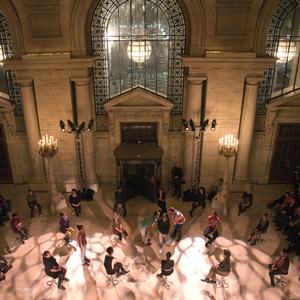
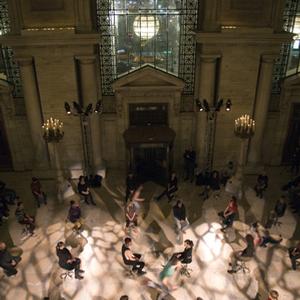
For the Rolex program’s culminating event, Rolex Arts Weekend, November 10-13 at the New York Public Library, Serle created P.O.V., a site-specific work for the famed building’s grand entrance lobby. He and three other Australian dancers (Kristy Ayre, Rennie McDougal and Lily Paskas) charged propulsively back and forth between a grid of 30 stools, pausing the action to interact one-on-one with audience embers seated on the stools, as a capacity larger audience looked on from two sides. Shortly before the premiere, Serle spoke of his interest in juxtaposing “the more visceral experience” of the opening portion with an attempt to “blur the lines between performer and spectator.” The single P.O.V. performance was reviewed in the New York Times; critic Brian Seibert noted the influence of Brown “in the work’s meticulous structuring and in its swung, follow-through mechanics” and wrote, “If P.O.V. was ultimately less perspective-shifting than amusing, it was a skillful apprentice exercise.”