

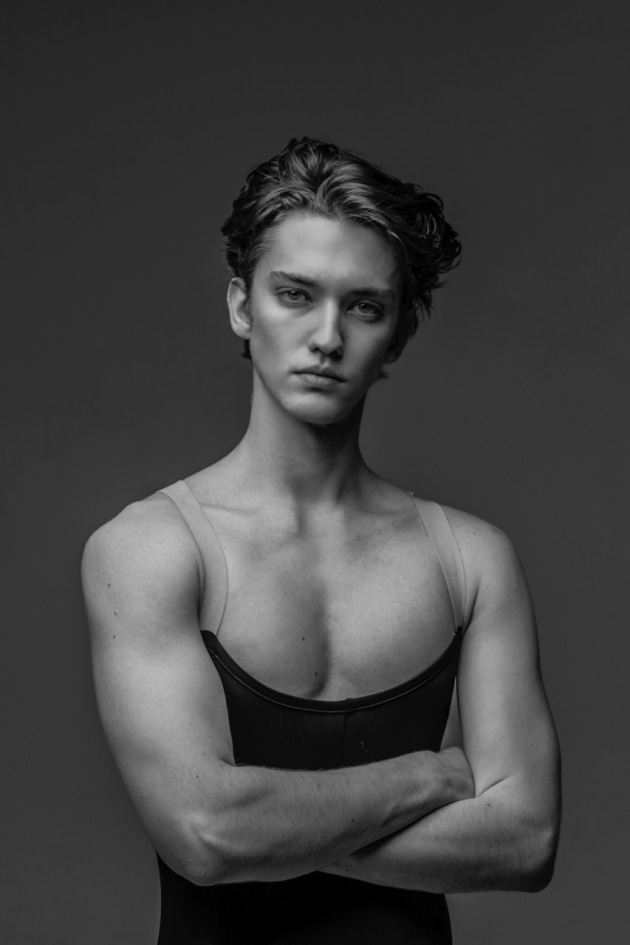

The sudden dismissal of principal dancer Julian MacKay from Bayerisches Staatsballett has developed into an unusually public dispute, with the dancer and company offering sharply different accounts of the events surrounding his departure.
The Munich company announced on July 13 that MacKay’s employment had ended with immediate effect, one week before the close of its season. Its initial statement thanked the American dancer for four seasons with the company but said it could not disclose the reasons for the short-notice termination on legal grounds.
MacKay quickly responded through Instagram.
“After four years I was fired. Shocked to find this out through Instagram,” he wrote.
He said he had raised concerns with theatre management about what he believed to be misconduct and unfair treatment within the ballet department. According to MacKay, he asked for those concerns to be investigated and indicated that he would resign if they were not. Instead, he said, he was dismissed while on sick leave.
MacKay did not publicly explain the conduct he had reported, identify the people involved or indicate whether his concerns extended beyond his own treatment. He nevertheless framed the situation as part of a wider industry problem, writing that it was not acceptable to treat artists in this way and that he would not remain silent about abuse in dance.
Bayerisches Staatsballett directly contradicted his claim that he learned of the dismissal online. In an update, the company said MacKay attended a meeting on the morning of July 13 and received termination letters in both German and English. It said he was informed personally of the decision and its reasons before the announcement appeared on Instagram approximately 30 minutes later.
The company also said the dismissal had been preceded by several official and informal discussions involving MacKay, Ballet Director Laurent Hilaire and representatives of the Bayerische Staatsoper since April. It has not revealed what occurred during those discussions.
Comments were disabled beneath the company’s announcement. Bayerisches Staatsballett said it had taken the step to prevent the spread of false information, speculation and hate, adding that legal restrictions prevented it from commenting further.
This has left one central point of the story unresolved. MacKay says he was shocked to discover through Instagram that he had been fired. The company says it had already formally dismissed him in person, provided written documentation and explained its decision.
Without the termination letter, a transcript of the meeting or further evidence from either side, it is not possible to reconcile those accounts. Some online observers have suggested MacKay may have attended the meeting without understanding that the dismissal had taken immediate and final effect until he saw the public statement. Others argue that the company’s detailed chronology makes his version difficult to accept. Both remain interpretations rather than established fact.
The company has continued to withhold its official grounds for dismissal. A spokesperson did, however, tell German news agency dpa that MacKay’s concerns had related primarily to Hilaire’s casting policy. That description has shaped much of the discussion around the dispute, although it represents the company’s characterisation of MacKay’s complaint, not a complete or independently verified account of what he reported.
Casting had already attracted attention during the final weeks of the season. MacKay appeared as Des Grieux in John Neumeier’s The Lady of the Camellias, rather than as the ballet’s central male character, Armand Duval. German dance commentary has suggested that dissatisfaction over leading roles and performance opportunities had contributed to a deteriorating relationship between dancer and director.
The casting theory has been widely repeated across ballet forums and social media, where users have revisited MacKay’s recent repertoire and debated whether a dancer of his international profile had been given sufficiently prominent opportunities. Others have countered that principal rank does not guarantee particular roles and that casting remains an artistic director’s responsibility.
A more serious allegation appeared in German tabloid reporting, which claimed MacKay had filmed a rehearsal involving Hilaire without permission and posted material online before deleting it. Neither MacKay nor Bayerisches Staatsballett has publicly confirmed that account, and it should not be regarded as an established reason for his dismissal.
Online speculation has also turned towards MacKay’s extensive international guest appearances, commercial projects and highly visible social-media presence. Some commenters believe those outside interests may have caused tension within a large repertory company. Others see that argument as an attempt to discredit a dancer for building an independent career and speaking publicly about his workplace.
Reddit discussions have followed the activity of current and former Bayerisches Staatsballett dancers, examining who liked the company’s announcement, who engaged with MacKay’s posts and who shared end-of-season messages thanking Hilaire and the company. Some users have interpreted that activity as quiet support for management. Social-media likes, omissions and similarly worded posts, however, cannot reliably reveal what individual dancers know or believe.
The debate has consequently divided into two broad narratives. One presents MacKay as a dancer dismissed after challenging misconduct in a rigid and hierarchical institution. The other presents an escalating employment dispute centred upon casting, professional boundaries and dissatisfaction with artistic decisions.
At present, the available evidence proves neither.
On July 15, MacKay issued a shorter statement saying that, after reviewing the situation, he believed his contract had been terminated unlawfully and would pursue legal action. The Bayerische Staatsoper declined to respond to that announcement, and MacKay has not publicly provided further details about the proposed proceedings.
MacKay joined Bayerisches Staatsballett for the 2022–23 season after earlier engagements with The Royal Ballet, the Mikhailovsky Theatre and San Francisco Ballet. Trained at the Bolshoi Ballet Academy, he had become one of the Munich company’s most internationally recognisable dancers, with a substantial following beyond its regular audience.
That visibility has ensured that a private employment conflict has unfolded before a global ballet community accustomed to receiving tightly controlled departure announcements. The result is a story filled with assertions but still missing its decisive information: the reasons written in MacKay’s termination letter, the substance of his allegations and the events that occurred during months of discussions behind closed doors.
Until those details emerge, MacKay’s dismissal remains both a significant rupture between a prominent dancer and a major European company, and a reminder of how quickly social media can turn an unresolved workplace dispute into an international public trial.