

Sydney Dance Company’s INDance 2026 returns this autumn with a program that places independent choreographic voices at the centre of the mainstage. Across two weeks at the Neilson Studio, four full-length works move between V8 racing culture, endurance performance, rave, and reimagined classical forms, each interrogating how the body absorbs and reflects the worlds around it .
Within that program, the works of Emma Harrison and Jenni Large sit in a clear conversation. Both place the body under pressure, though from different directions, examining how systems of power are carried, performed and, at times, resisted.
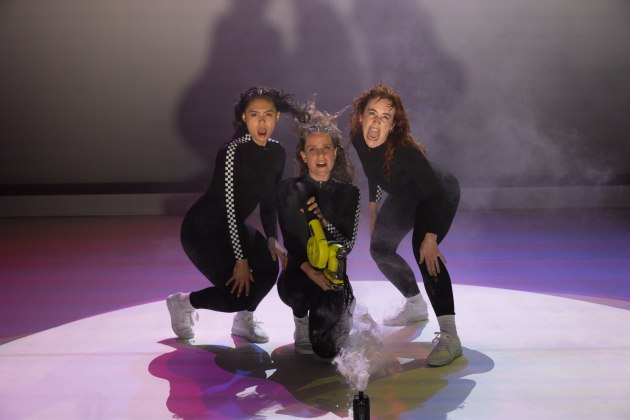
Harrison’s High Octane draws directly from a world she knows intimately. “I grew up in regional Australia surrounded by a very specific kind of masculinity. V8 supercars, footy, fishing, drinking, grilling, casual misogyny, loyalty to the boys,” she says. These are not external references, but behaviours and physicalities shaped early and carried forward.
“I think these worlds have always been in my body,” she continues. “The choreography emerged when I recognised these worlds in myself… how this world sits in the body, how it drives pace and stamina, how it insists on pushing past limits.”
The work draws on those physical conditions directly, from posture and endurance through to effort and excess. “I want to push that to see what happens when the body doesn’t just reference that world but fully commits to its logic. Embodying the systems that produce it and the cost of surviving inside them.”
That pressure extends to questions of identity. “There’s a constant slippage between identity and performance in the work… what feels like identity can be intensified through performance until it tips into something else.” For Harrison, that overlap becomes a tool. “Rather than separating performance from my lived experience, I see them as overlapping… the work is not just about representing identity, but testing how identity is formed, performed, and shaped by the systems around it.”
There is also a clear consideration of audience. “I think a lot about who gets to feel at home in a theatre space, and who doesn’t… how do I get my family to come and watch something and feel seen in it?” It is a question of access and recognition, of what kinds of stories and bodies are visible on stage.
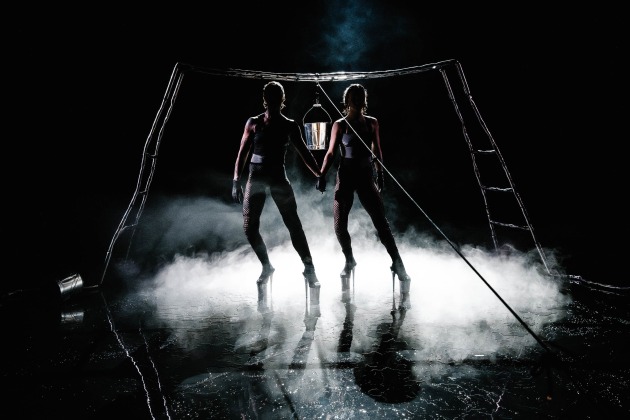
If High Octane moves through hypermasculine codes, Jenni Large’s Wet Hard Long turns to the sustained pressure placed on the femme body. The work holds tension over time, physically and visually, asking how long it can be maintained and what that reveals.
“I am very interested in tension. How it forms, when to release it and why,” she says. “When performers and audience members are willing to stretch just beyond what feels comfortable, this is when there is a point of visceral exchange.”
That tension is not incidental. “This viscerality is palpable… and in Wet Hard Long, this tension represents the sustained pressure that women and femmes experience.” Through the process, those pressures became increasingly specific. “Exploring the duality between agency and inertia, labour and liberation, sexuality and sexualisation cemented my own feminist politics… the creative process revealed countless shared experiences.”
The work extends beyond the performers. Audience participation introduces a second layer of pressure, shifting attention and responsibility. “Power is given to the audience member, and at the same time, their vulnerability is highlighted as they enter our domain,” Large explains.
The terms of that exchange are clear, but the experience is not fixed. “Their task is not necessarily ‘fail-proof’, which gives the exchange a feeling of excitement and unease… they are trying not to slip or falter, to hold still, all the while likely questioning if they’re getting it ‘right’.”
In that moment, the audience shares the same conditions placed on the performers. “The exchange… flips the focus from the performers to the viewer, sharing the pressure of being viewed, the challenge to sustain the task at hand and the responsibility we all share to dissolve inequality and uplift women and femmes.”
Across both works, the body carries these pressures in different ways, through endurance, repetition, and physical demand, making visible the conditions that shape how bodies move, are read, and are valued.
INDance, now in its fifth year, continues to provide a platform for these investigations, offering independent choreographers the space to return to and develop work that might otherwise have a short life. The 2026 season runs 30 April–2 May and 7–9 May at Sydney Dance Company’s Neilson Studio.