


There is a particular kind of discipline required to stand under a light and do very little.
At Crazy Horse Paris, movement is reduced, distilled, almost withheld. A hip settles, a shoulder shifts, a gaze lands and holds. The choreography is exacting, but what reads is something quieter and far more difficult to manufacture: presence. The body is not asked to demonstrate, it is asked to exist with intention.
Since 1951, when Alain Bernardin transformed a cluster of cellars on Avenue George V into something altogether new, the cabaret has held to a singular proposition: that the female body, disciplined and considered, can function as both instrument and artwork. Each act is constructed as a tableau. Light replaces costume. Line replaces excess. Classical training sits underneath it all, reworked into a house style that is at once rigid and strangely permissive.
For Australian dancers, there is no obvious pathway into this world. There is no cabaret tradition here in the Parisian sense, no established bridge between studio and revue. And yet, increasingly, Australian performers are arriving on this stage, carrying with them a training culture built on adaptability, resilience and a certain appetite for risk.
What they encounter is something highly controlled. What they bring is something less easy to define.
Gypsy Jane
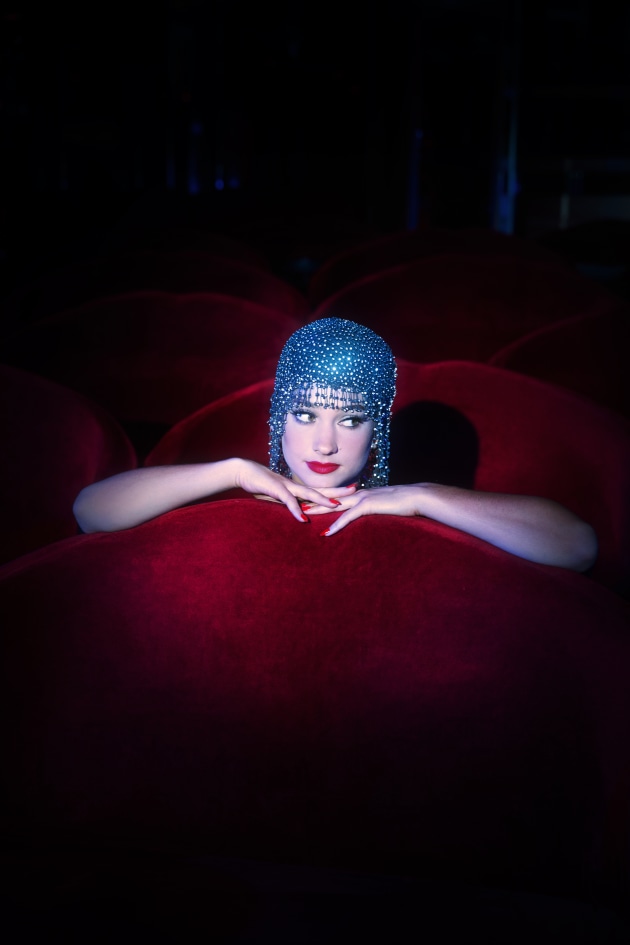
Gypsy Jane’s pathway into Crazy Horse Paris is shaped by a kind of forward momentum that feels instinctive rather than strategic. Before Paris, she had already begun constructing her own ideas about performance, creating a show in Australia built around multiple visions of femininity, testing what that concept could hold while she was still forming her own understanding of it.
That curiosity sits clearly in the way she speaks about the work now.
“It’s the artistic choices made at every level of the show that make Crazy Horse Paris incomparable. Light projections, costumes, music, dancers, and choreography… at Crazy Horse Paris, everything is art — starting with the way nudity is conceived. The Paris stage is also so small that it gives the show a deeply intimate atmosphere, making it stand out as an unparalleled experience among renowned cabarets.”
Her decision to audition carries that same sense of inevitability.
“There’s definitely something in Australian culture that encourages you to just go for things. Growing up, there’s a kind of tough, grounded attitude — a sense that if you want something, you work for it. That mindset really shaped the way I approached the audition. I didn’t want to look back and wonder what might have happened if I hadn’t tried.”
“Being from Australia also means the rest of the world feels very far away, so travelling 10,000 miles was both an opportunity and a commitment. I knew that whatever the outcome, I would learn, grow, and experience a part of the world I hadn’t seen before.”
Inside the company, the negotiation is constant. The aesthetic is fixed, the legacy well established, and yet each dancer is required to locate themselves within it.
“Crazy Horse Paris has a unique style that cannot be found anywhere else in the world. It is what gives the cabaret its enduring reputation and legacy, admired for decades. Within this tradition, Crazy Horse Paris also celebrates individuality, allowing each dancer’s personality to shine through the choreography and solo acts.”
That individuality is not abstract, it is lived moment to moment on stage.
“I reveal different sides of my personality. There’s the cheeky, playful Gypsy and the intense, powerful Gypsy. It’s so much fun to embody them both. I love spreading joy, making people feel good, and seeing them laugh and smile back at me.”
At its core, her relationship to the work is about connection, between body and audience, between character and self.
“Dancing on the Crazy Horse Paris stage is the ultimate expression of self, so you need a lot of confidence in who you are while also embracing the most fragile facets of your humanity.”
Frida Whirlwind
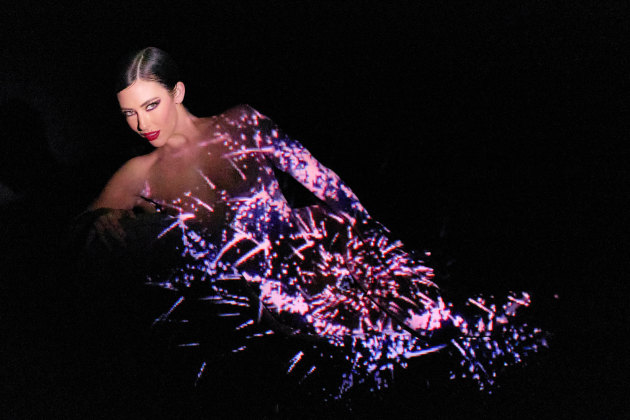
Frida Whirlwind’s story begins in a smaller, quieter place, but with the same clarity of intention. A country town, a sense of certainty about being on stage, and a training pathway that initially pointed toward classical ballet.
“I grew up in a small country town in Australia, but I always carried a very big dream. From a young age I was certain that I wanted to be on stage. That sense of purpose gave me a quiet determination — I simply never imagined a life that didn’t involve performing.”
That determination is paired with a distinctly Australian resilience.
“We’re quite easygoing on the surface, but underneath there’s a strong sense of perseverance. You adapt, you keep moving forward, and you don’t let setbacks define you.”
Her relationship to dance, however, has never been uncomplicated.
“Dance has always been something I’ve experienced very intensely. The ‘love-hate’ relationship I’ve spoken about really comes from that constant pursuit of perfection — always analysing, always wanting to go further, to be better.”
The shift to Crazy Horse Paris did not remove that intensity. It reframed it.
“What I’ve discovered at Crazy Horse Paris is a very different dimension of performance. The precision is still there — it has to be — but it’s balanced by something much more human. On this stage, there is space for individuality, for character, for emotion. Whatever you are feeling in a moment can actually become part of the performance.”
That balance becomes central to how she now understands her craft.
“The perfectionism is still part of me and probably always will be… but it no longer exists in isolation. It’s supported by expression, sensuality, and presence.”
There is also a quiet sense of inevitability in how she looks back on the turning point that led her here.
“Sometimes the path you imagine isn’t the one you’re meant to walk — but it leads you exactly to the stage that was waiting for you.”
Cookie Cupcake
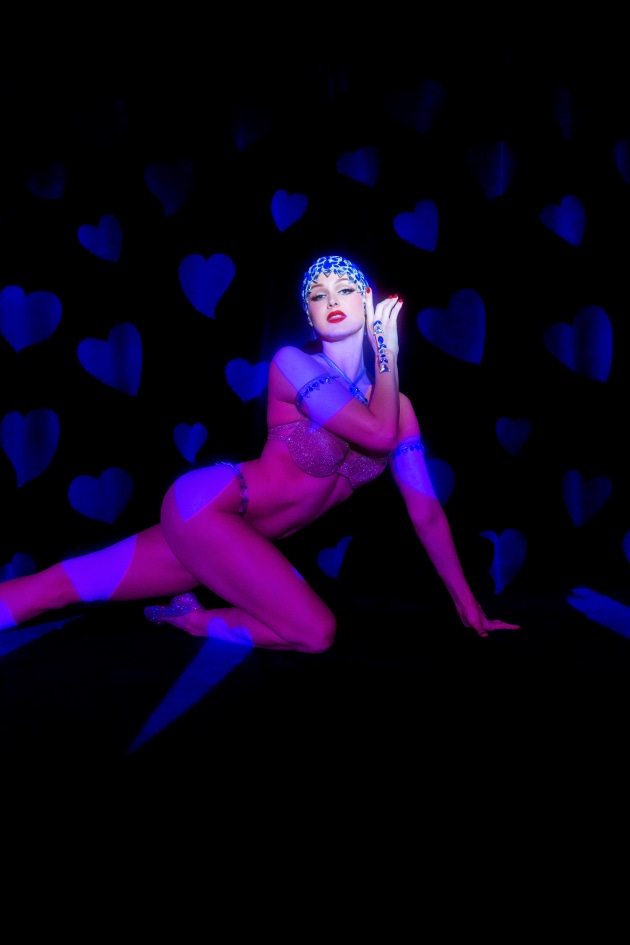
Cookie Cupcake’s pathway resists easy categorisation. Her early life was shaped by constraint, by a strict cultural environment and by the experience of navigating ADHD, both of which have informed the way she approaches performance.
“I honestly have to thank my cultural and neurological constraints throughout my upbringing for strengthening my creative drive… it fuels my inspiration for dance and creativity and means I never take a moment on stage for granted.”
Dance, for her, operates as a form of clarity.
“I’ve never been able to communicate my feelings through words but when I dance, the world feels quiet. It’s almost a form of therapy and it drives me to be more creative and to let myself be truly free on stage.”
Her training has been deliberately broad, spanning commercial work, teaching and further study, and that breadth becomes essential in adapting to the specific demands of Crazy Horse Paris.
“Training my versatility was absolutely essential… it made it easier to adjust to the Crazy Horse Paris technique. With Disneyland I learnt how to perform as a character… all of these help to bring Cookie Cupcake to life on stage and make my performance unique.”
There is also a strong sense of personal redefinition in her reflections on femininity.
“Growing up Mormon I personally never felt empowered as a woman… I always struggled with the idea that I was never going to be able to hold the same position of power as the men around me.”
“Since I’ve been dancing at Crazy Horse Paris, I’ve discovered a different kind of femininity, a power I never imagined. Here, I feel free to express my sensuality without restraint.”
Her perspective on ambition remains grounded, almost practical in its directness.
“Where there is a will, there is a way… train hard, audition lots, get rejected, fight for your place in this industry and if you have a dream — go get it.”
Liza Stardust
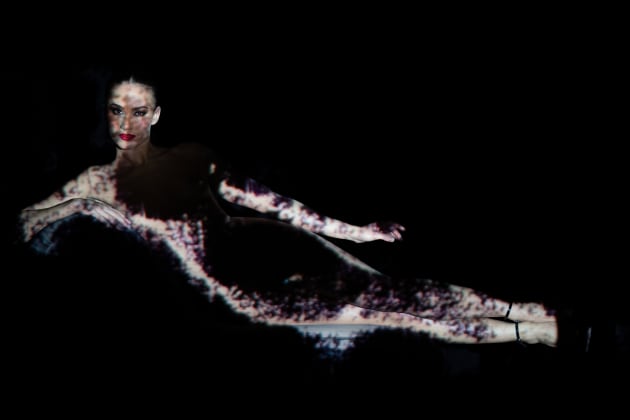
Liza Stardust’s relationship to performance begins earlier and more seamlessly than most. Born into a family of performers, her connection to the stage is embedded from the beginning, less something she discovered than something she inherited.
“The stage was always my home. Always the place I felt most comfortable and free to be myself.”
That sense of familiarity shapes how she approaches the demands of the show, where personality carries as much weight as precision.
“Experience brings comfortability when on stage. And if you are willing to embrace your uniqueness, and truly show your personality, you can have so much fun on the stage.”
Her influences are obvious, rooted in a lineage of performers whose work extends into something broader.
“Liza Minnelli quickly became my ultimate reference… like Audrey Hepburn and Marilyn Monroe, the artists of that generation created Hollywood classics. They are icons. I built my vision of dance from these icons.”
Her articulation of femininity aligns with a longer thread across all four dancers, though she expresses it with particular clarity.
“In this world, ‘femininity’ and ‘strength’ are rarely combined, yet they are almost synonyms.”
There is also a strong sense of continuity in how she frames her own development, an awareness that this stage is not an endpoint but part of an ongoing evolution.
“I think my dancing and femininity will evolve a lot on this stage.”
What connects these dancers is not a shared pathway, but a shared instinct.
Australian training tends to produce performers who don’t wait for the rules to be explained. They adapt, they adjust, they get on with it. That quality lands well here, in a world that looks tightly controlled but leaves just enough space for personality to cut through.
The audition process says as much.
“You go on stage without any idea of the music… you just have to enjoy yourself, dance and be yourself.”
Simple in theory. Exposing in practice.
Technique is a given. What matters is what sits on top of it. Timing. Nerve. The ability to hold a gaze without rushing to fill the silence.
Crazy Horse Paris has never fit neatly into the dance world’s categories, and it doesn’t seem especially interested in trying. It borrows what it needs and sharpens it into something of its own.
The Australians, for all their distance from it, make sense here, bringing a directness of approach that aligns with the work’s demands. There is no room for hesitation. What reads is commitment, and the ability to hold a moment without overworking it.
That clarity extends to the visual language of the show itself. The wigs, identical in cut, are among its most recognisable signatures, a unified image that is immediately legible. Within that uniformity, individuality persists. The way a head is held, the timing of a wink, the quality of stillness. Even within a system this controlled, the dancer remains visible.
On a stage this small, there is nowhere to hide. A line is either sustained or it isn’t. A moment either lands or it passes. What emerges is something both precise and alive, shaped as much by restraint as by execution.
A small stage. A flash of red. A line held just long enough.
And the distinct impression that they’re enjoying themselves, which, in the end, might be the most persuasive technique of all.
-Olivia Weeks
This article is featured in the April Issue of Dance Australia